
Eng. Randa El-Menshawy, Minister of Housing, Utilities, and Urban Communities, held a meeting with officials of Mwasalat Modon Misr to review the company’s vision for managing and developing the sustainable public transportation system and shared mobility services in the new cities.
The meeting was attended by Dr. Walid Abbas, deputy minister of housing for new urban communities; several officials from the ministry and the New Urban Communities Authority; and Eng. Mohamed Abu Taleb, CEO of Modon Misr Asset and Facility Management Company. At the beginning of the meeting, Eng. Randa El-Menshawy emphasized the importance of developing the transportation system in the new cities in line with urban and population growth rates.
She also stressed the need to provide safe, regular, and sustainable transportation services and coordinate with the Ministry of Transport while benefiting from modern technological solutions in operations, fare collection, and vehicle movement monitoring to improve the efficiency of services provided to citizens.
The Minister of Housing explained that the new transportation system should include clear mechanisms for monitoring, oversight, and performance measurement, relying on specific indicators to evaluate service quality and regularity, as well as ensuring the swift handling of citizens’ complaints and observations. This would help respond to the needs of residents across the various new cities and contribute to improving the level of services provided to them, alongside the expansion of smart systems.
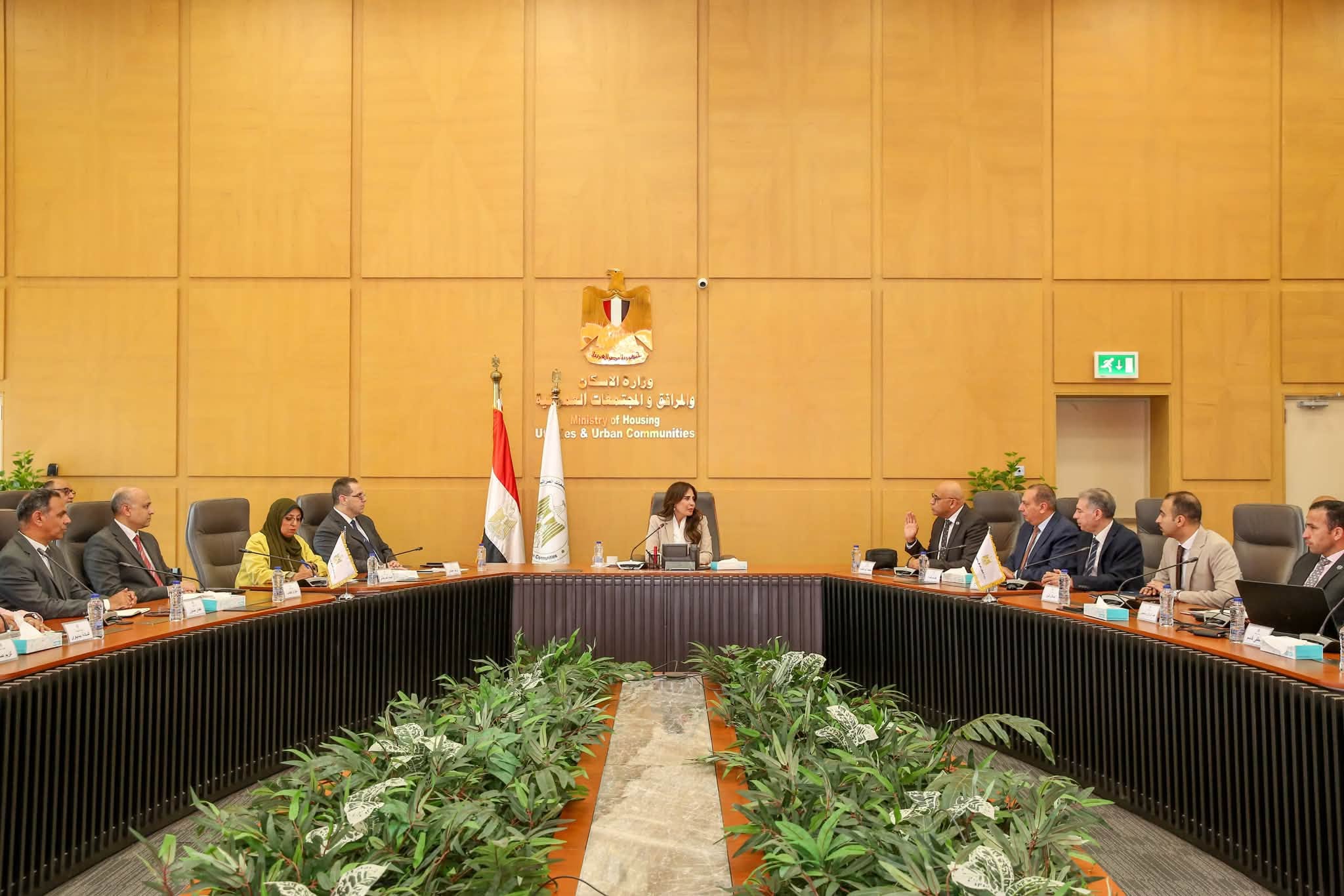
During the meeting, company officials presented their vision for providing a sustainable internal transportation network in the new cities and unifying the visual identity of all shared transportation services in each city in accordance with sustainable urban transportation standards, in addition to regulating and controlling unlicensed transportation services.
The presentation also addressed an integrated model involving a group of specialists in transportation operations, information technology, transportation consulting, and land and commercial asset management, with the aim of establishing an integrated platform for smart and sustainable urban transportation.
The meeting also discussed a plan to develop the internal transportation network in the new urban communities and connect it to the main transportation network of the Ministry of Transport, achieving integration with the Light Rail Transit system and the monorail and contributing to improving citizens’ mobility between the new cities and various areas.
A number of proposed measures to ensure the sustainability of the transportation system were also reviewed, including the provision of 200 new vehicles, the conclusion of maintenance and insurance contracts, the establishment of service-level agreements and operational plans for each city, and the creation of main and subsidiary operations centers and operations management rooms at city authorities.
The meeting also included a review of the plan for training and improving the efficiency of drivers, as well as developing a unified visual identity for transportation services, in addition to the proposed timetable for launching vehicles in the new cities.
At the conclusion of the meeting, the minister of housing directed that joint coordination continue and that all technical, operational, and economic proposals be studied to ensure the highest levels of efficiency and sustainability for the transportation system within the new cities while providing advanced urban transportation services that keep pace with the state’s urban expansion plans and the development of integrated urban communities.