
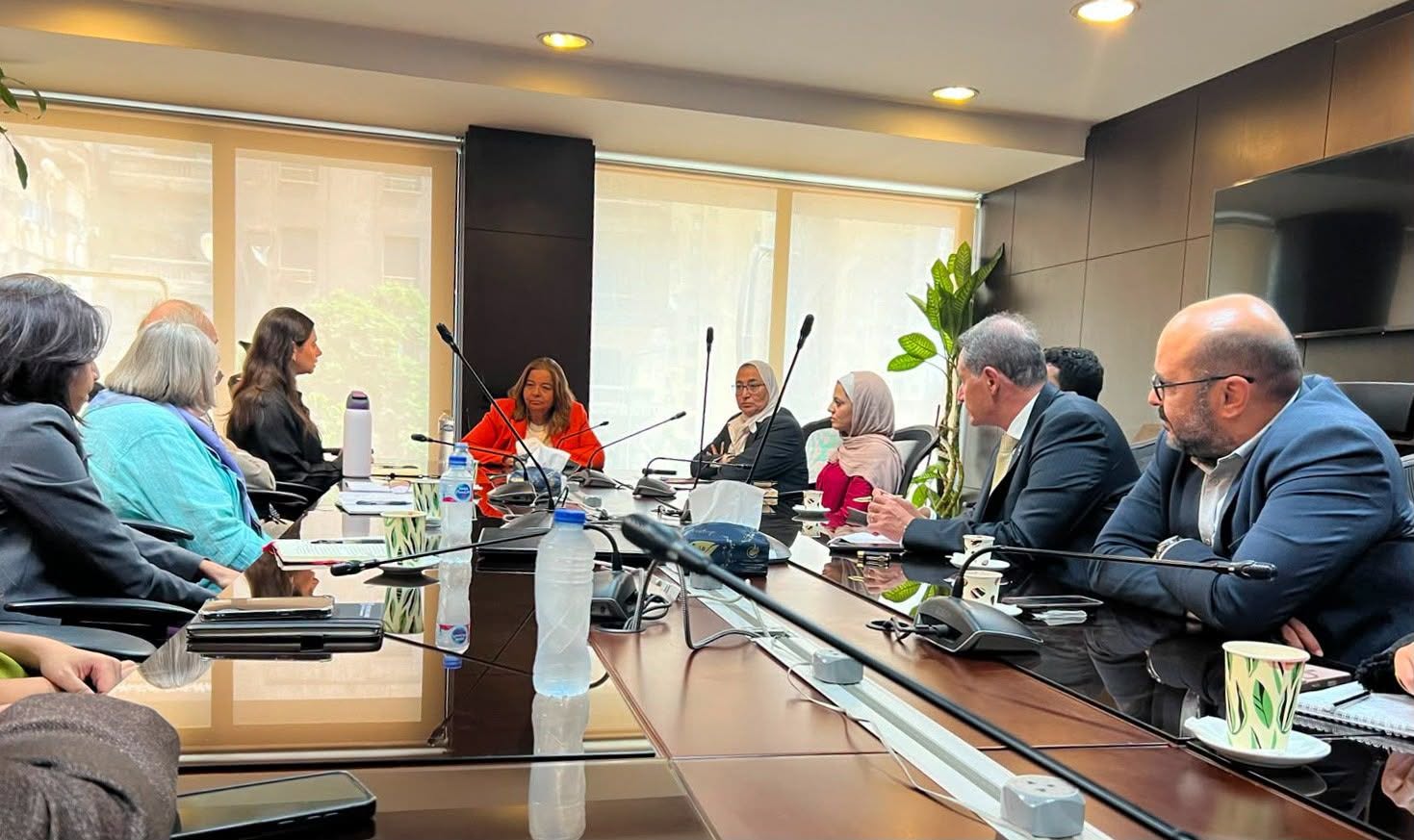
Mai Abdel Hamid, CEO of the Social Housing and Mortgage Finance Fund, received a delegation from the World Bank, headed by Marga Hook-Smith, World Bank Advisor on Housing and Finance Policies; Claude Tiffin, World Bank Advisor on Rental and Affordable Housing Programs; Alia El-Didi, Financial Sector Specialist; and Zeeshan Karim, World Bank Urban Development Specialist, as part of the preparation of a specialized study on housing in Egypt.
The meeting was also attended by a team of researchers from Cairo University, headed by Dr. Walid Bayoumi, lecturer at the Department of Regional Development, Faculty of Regional and Urban Planning, Cairo University.
The meeting reviewed the study’s key areas, which examine Egypt’s housing system from various perspectives, particularly homeownership and rental programs, financing and support mechanisms, and opportunities for private-sector participation in increasing the supply of affordable housing units.
The meeting also addressed the implementation of a detailed “West Cairo Deep Dive” study covering 6th of October, New October, and October Gardens cities, aimed at analyzing supply and demand conditions and identifying future investment opportunities.
Mai Abdel Hamid affirmed that the study represents an important step toward gaining a more accurate understanding of the needs of the Egyptian housing market, particularly in terms of measuring actual demand and evaluating rental and homeownership programs, thereby supporting the development of housing policies during the coming period.
During the meeting, the Fund’s CEO reviewed the key indicators of the social housing program. A total of approximately 870,000 housing units have been completed since the program was launched, benefiting more than 735,000 low- and middle-income families through an integrated system based on direct cash support, subsidized mortgage financing, and repayment periods of up to 20 years, contributing to improved housing affordability.
She noted that the Fund is committed to not offering units for allocation or allowing citizens to move into them until all essential utilities and services have been completed. These include drinking water, sewage, electricity, and road networks, in addition to educational, healthcare, commercial, and other essential services. Projects are also connected to transportation networks and major roads, ensuring the provision of integrated urban communities that promote quality of life and meet citizens’ needs from the first day of occupancy.
Abdel Hamid also reviewed indicators of demand for affordable housing in the areas covered by the study. The figures showed continued high demand for housing units, with 451,000 applicants in 6th of October, October Gardens, and New October cities.
More than 307,000 applicants met the eligibility requirements, while more than 191,000 citizens have already benefited from the program. In this context, more than 211,000 housing units have been completed in these cities, while the implementation and allocation of units to the remaining eligible applicants are being completed successively as ongoing projects are finalized.
The Fund’s CEO explained that the Fund implements a field-based monitoring and inspection system through a specialized unit responsible for inspecting housing units to ensure that they are occupied and used in accordance with the applicable regulations. She noted that occupancy rates in the new cities are high, reflecting growing demand for housing in these cities as services and utilities continue to be completed and quality of life is enhanced.
She pointed out that the study’s findings will also contribute to establishing an integrated framework to enhance private-sector participation in affordable housing projects by designing more attractive partnership models for real estate developers. This will help increase the supply of housing units and accelerate efforts to meet citizens’ needs, particularly those eligible applicants currently on waiting lists.
Abdel Hamid highlighted the state’s direction toward building on the success of the social housing program through the implementation of one million new housing units. This represents a genuine opportunity to strengthen the private sector’s role as a key partner in urban development. She affirmed that the Fund is working to leverage the study’s findings in preparing future housing offerings in a manner that balances developers’ investment viability with maintaining citizens’ ability to obtain suitable housing at affordable prices.
She explained that the Fund is considering providing additional incentives to real estate developers as part of new housing offerings to encourage them to implement green and sustainable housing units that comply with green building and energy-efficiency standards. This is in line with the state’s direction toward expanding sustainable housing and achieving urban development and environmental objectives simultaneously.
The meeting concluded by emphasizing the importance of continued cooperation between the Social Housing and Mortgage Finance Fund and the World Bank in developing affordable housing policies, leveraging the study’s findings to support decision-making and enhance private-sector participation, and expanding the provision of adequate housing in line with the state’s objectives and Egypt’s Vision 2030.