
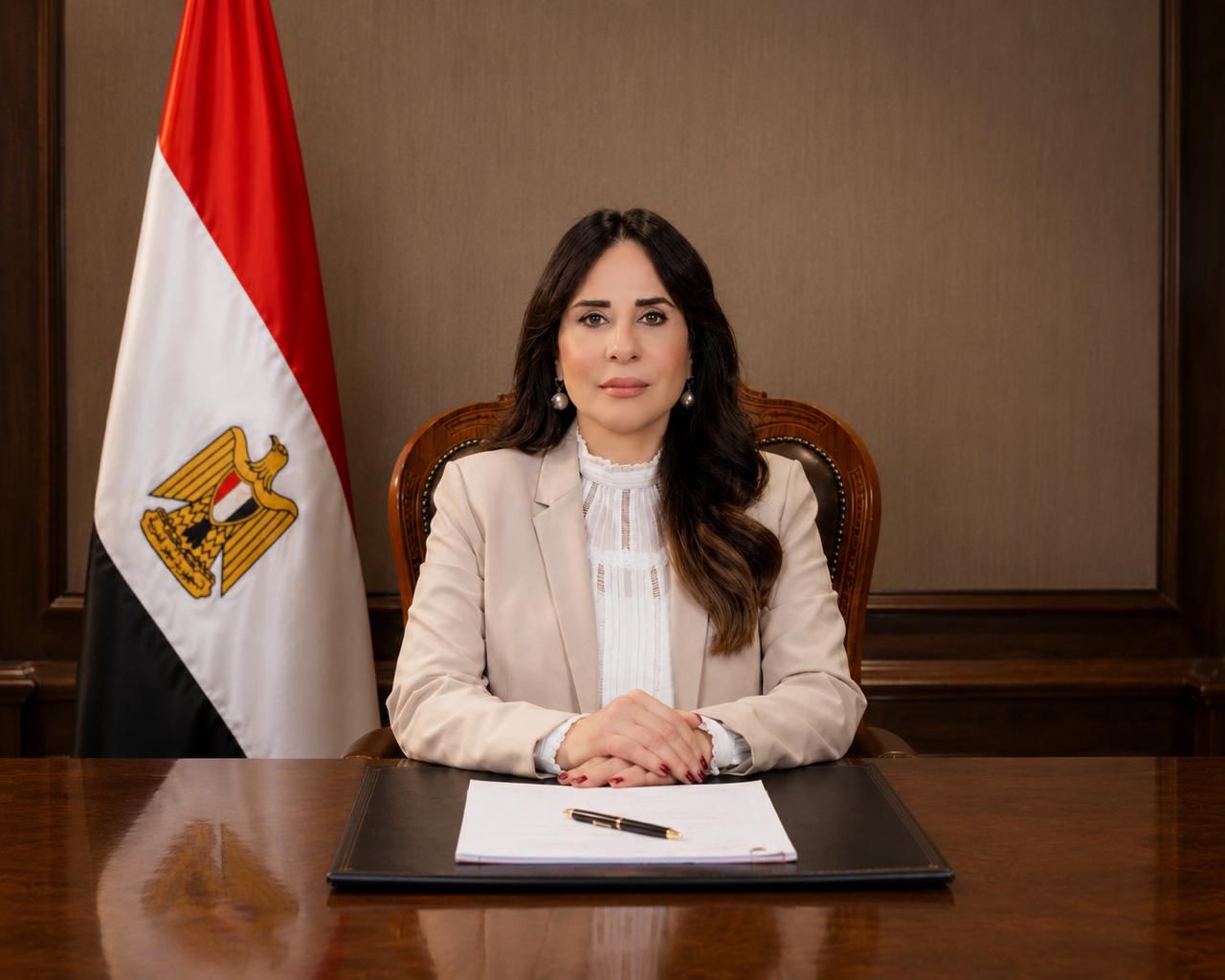
Engineer Randa El Menshawy, minister of housing, utilities, and urban communities, chaired the Board of Directors meeting of the New Urban Communities Authority (NUCA) in the presence of Dr. Walid Abbas, deputy minister of housing for urban communities; Eng. Ahmed Omran, deputy minister of housing for utilities, and senior ministry officials.
The meeting reviewed the executive status of the Authority’s work plan, assessed performance indicators, and discussed priorities for the coming phase as part of implementing President Abdel Fattah El-Sisi’s directives to continue comprehensive urban development efforts and strengthen the role of new cities as engines of economic and social development.
NUCA Work Plan
At the beginning of the meeting, the board of directors approved the draft budget for the 2026/2027 fiscal year. During the meeting, Minister Randa El Menshawy emphasized that the New Urban Communities Authority is one of the Egyptian state’s most important institutions in implementing the vision of the New Republic.
She noted that over the past years, the authority has achieved a qualitative transformation in urban development through expanding the construction of new cities, upgrading infrastructure, implementing housing projects for various income groups, and maximizing the real estate sector’s contribution to the national economy in line with Egypt Vision 2030.
The minister added that NUCA’s vision and strategy are based on several key pillars, including strengthening strategic partnerships with the private sector and expanding its role in urban development projects; creating a more attractive and efficient investment environment through governance, transparency, and digital transformation; maximizing the economic value of the authority’s assets; promoting institutional excellence and digital transformation; attracting local and foreign investments; and improving quality of life in new cities by providing advanced infrastructure and integrated services.
These efforts support sustainable urban development and align with the state’s objectives and Egypt Vision 2030. She explained that the Authority’s work plan focuses on expanding housing projects in new cities, contributing to national development projects and existing urban renewal, completing development plans for new cities, and implementing the state’s strategy for developing the Northwestern Coast as one of Egypt’s most promising development corridors.
Regarding the housing sector, the minister highlighted the continuation of the ministry’s strategy to expand housing programs for all income segments, achieving social justice and meeting citizens’ housing needs through affordable and middle-income housing programs, luxury housing, and expanded partnerships with the private sector.
The meeting reviewed NUCA’s achievements in the housing sector, where, since 2014, projects have been implemented under the Housing for All Egyptians initiative for low- and middle-income citizens; the Green Housing Program; Distinguished Housing; Sakan Misr; Dyarna; Janna; residential towers and villas; and the Zelal project, in addition to housing units developed through partnerships with the private sector.
The meeting also discussed the reactivation of the Social Housing Program, which includes launching a new phase comprising approximately 77,000 housing units distributed across 14 new cities.
It also includes the first phase of the private-sector participation program to develop affordable housing in an area of 383 feddans, through 17 land plots across 8 new cities, reflecting the expansion of public-private partnership mechanisms to provide housing units that meet the needs of different segments of society.
The meeting further reviewed the Authority’s private-sector partnership projects, which include 118 projects covering nearly 11 million square meters, providing approximately 74,000 housing units, and bringing the total number of housing units delivered through the Ministry of Housing and private-sector projects to around 2.034 million units.
Northwestern Coast Development
Under the Northwestern Coast development strategy, the board reviewed plans aimed at transforming the region into a year-round sustainable development area by creating an urban extension beyond the narrow coastal strip, developing new tourism and investment models based on the region’s natural assets, integrating tourism, economic, service, and industrial activities, and strengthening regional transportation networks connecting the area with Cairo and the Delta to facilitate year-round movement of people and goods.
The strategy also includes supporting industrial zones through expanding industrial land offerings based on industrial priorities and creating employment opportunities to achieve balanced development and population stability.
The meeting also reviewed the operational status of several projects on the Northwestern Coast, particularly New Alamein City, where the cinema complex and Roman Theater in the Heritage City have been opened and are now operational. The Real Estate Registration Office has also been inaugurated, while preparations continue for the operation of additional commercial and service facilities, enhancing the city’s readiness and ensuring sustainable operation.
The Board also reviewed progress on the Boulevard District within the Mazarine project, where a large percentage of commercial units have been allocated and are being prepared for operation. Commercial exhibition spaces, restaurants, and medical and healthcare centers have also been allocated, along with headquarters for several government entities and institutions, contributing to higher occupancy rates and integrated services within the project.
Fourth-Generation Cities and Land Regularization
The Board discussed updates on the implementation of fourth-generation cities and the progress achieved in housing, utilities, and service projects, as well as the continued development of the New Administrative Capital, including projects in the R3 and R5 residential districts, the Central Business District (CBD), utility networks, transmission lines, pumping stations, the Green River park, and landscape development works.
The board also reviewed the executive status of land regularization files in New Obour, El Shorouk, New Sphinx, Sheikh Zayed, 6th of October, and New October cities. Progress was presented on legalization applications, preparation of strategic and detailed plans, completion of land annexation procedures, and legal status adjustments. A total of 124,651 legalization requests have been submitted, with 90.67% already reviewed, alongside the implementation of the necessary infrastructure and utility projects.
Minister Randa El-Menshawy noted that the ministry continues implementing an integrated strategy based on scientific planning, sound management, optimal resource utilization, and expanded use of advanced digital systems for project management. These efforts improve the efficiency of new city authorities, accelerate implementation, enhance project quality, strengthen the investment climate, and support sustainable urban development.
She also referred to the draft law establishing the Egyptian Federation of Real Estate Developers, explaining that it forms part of the Ministry’s vision to regulate a rapidly growing real estate market amid the significant expansion of development projects and increased private-sector participation, making a clear professional and regulatory framework essential.
The minister added that the real estate sector is one of the key pillars supporting Egypt’s national economy and is experiencing unprecedented urban growth, requiring an integrated legislative and regulatory framework that balances the protection of citizens’ rights, market stability, and the promotion of real estate investment.
She also highlighted the establishment of the ministry’s Rapid Response System, which has become an effective tool for monitoring citizens’ complaints by continuously tracking content published across digital platforms, analyzing complaints and appeals shared on social media, referring them to the relevant authorities, and following up until appropriate solutions are implemented. This contributes to improving service efficiency and increasing citizen satisfaction.
At the conclusion of the meeting, Minister Randa El Menshawy affirmed that the coming phase will witness continued accelerated efforts to implement the political leadership’s directives, achieve the state’s goals of building integrated urban communities, improve the quality of life for Egyptian citizens, and strengthen Egypt’s position as one of the leading countries in sustainable urban development.