
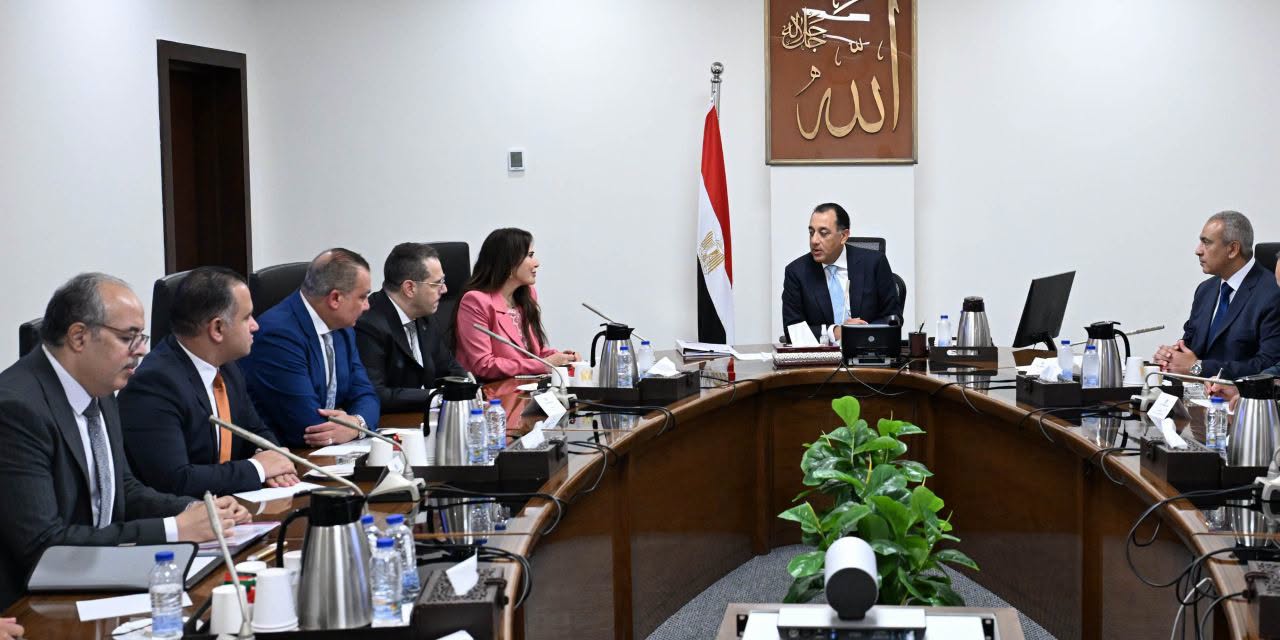
Dr. Mostafa Madbouly, prime minister, held a meeting on Wednesday to review the strategy for developing and advancing the cities of the Northwestern Coast, as well as to assess the current implementation status of ongoing projects.
The meeting was attended by Randa El-Menshawy, Minister of Housing, Utilities, and Urban Communities; Dr. Walid Abbas, Deputy Minister of Housing for New Urban Communities; Khaled Seddik, Assistant Minister of Housing; Mostafa Abdel Wahab, CEO of the General Authority for Tourism Development; and Islam Hassan, Assistant Deputy Minister of Housing for New Urban Communities.
At the beginning of the meeting, the Prime Minister emphasized that the meeting comes as part of efforts to accelerate comprehensive development in the Northwestern Coast region and maximize its returns, given its competitive advantages and promising opportunities, which offer broad prospects for attracting investments and creating diverse, sustainable economic activities throughout the year.
Madbouly explained that these efforts are being undertaken in implementation of the directives of President Abdel Fattah El-Sisi, president of the Republic, to formulate and implement integrated development plans for the region.
These plans aim to transform the region into a global tourism destination, maximize its national economic returns, ensure the integration of road and utility networks, and direct investments toward productive, industrial, and service sectors in these cities to provide sustainable employment opportunities. They also seek to attract foreign direct investment by providing incentives for international and local companies to establish major development projects in the region.
The Minister of Housing noted that the strategy for developing and advancing the Northwestern Coast cities extends through 2030 and is based on a comprehensive development vision to maximize the region’s potential through several key pillars.
These begin with extensive urban development to connect the coast with its desert hinterland and establish integrated residential communities while transforming the region into a sustainable tourism, investment, residential, and industrial destination operating throughout the year.
The minister added that the strategy aims to achieve integration among tourism, economic, and industrial activities to enhance operational sustainability while developing a smart transportation network to strengthen regional connectivity and ensure the smooth movement of people and goods. This will culminate in expanding the allocation of industrial land, creating permanent job opportunities and enhancing population stability in the region.
During the meeting, the implementation status of existing and future seawater desalination plants in the Northwestern Coast region and Matrouh Governorate was reviewed to meet projected needs through 2030 and 2050. The review also covered projects for constructing transmission lines connecting these plants, which will help enhance their capacity and operational efficiency.
The presentation also addressed the master plan for developing the urban hinterland of the Northwestern Coast. Eng. Randa El-Menshawy explained that the plan aims to achieve integrated development by dividing the region into five main sectors and special zones, ensuring comprehensive development encompassing tourism, industrial, agricultural, and residential activities.
The Minister of Housing added that the plan is based on an advanced transportation network connecting these sectors, including railway lines, the high-speed train, and the International Coastal Road. It also provides for diversified urban uses, including services, integrated housing, and industrial and logistics zones, supporting the region’s sustainable development objectives.
Randa also reviewed details of the five sectors comprising the plan. These include the “Tourist Villages” sector, designated for recreational and residential activities; the “Sidi Abdel Rahman” sector, targeted for tourism, industrial, and logistics activities; a third sector for mixed uses and regional services; as well as the “Ras El Hekma” and “West Ras El Hekma” sectors, designated for tourism, agricultural, and industrial activities.
Dr. Walid Abbas, deputy minister of housing for new urban communities, reviewed the implementation status of projects in the first sector, which include the development and upgrading of Marina El Alamein and “New Marina,” including the Lakes project in its first and second phases, the tourist promenade, and the development of Marina’s entrances, the “Champs-Élysées” area, and the Roman Theater.
The Deputy Minister of Housing added that work is underway on the “M8” and “M8 BY THE LAKE” housing projects, “Boghaz 24,” and bridges connecting the lakes, as part of an intensive plan to maximize investment opportunities and accelerate the completion of all implementation phases of the sector’s projects.
Abbas continued his review of the implementation status of first-sector projects, noting that completion at the villas and apartment buildings area of the “Marina 8” project reached approximately 91%. Excavation works in the first phase of the “New Marina Lake” reached 96.7%, while the “Boghaz” project, designated to connect the lakes, reached 93%. Work is also continuing on connecting bridges and protection works at Marina 5.
He also noted the completion of works to upgrade the service road at Marina, the tourist promenade, and the development of the “Champs-Élysées” area. He presented the balanced master plan for New Alamein City, whose projects are distributed among residential, service, tourism, and industrial sectors according to carefully planned proportions, while also highlighting completion rates for the beachfront towers, consisting of 18 towers containing 6,298 housing units.
For his part, Islam Hassan, Assistant Deputy Minister of Housing for New Urban Communities, reviewed the status of projects in New Alamein City, including the Heritage City and the Conference Hall, which has been completed with a capacity of up to 3,000 people. He also reviewed the implementation status and results of technical studies for the second and third sectors in the Sidi Abdel Rahman and West El Dabaa areas.
The presentation highlighted the master plan for the new urban community in El Dabaa, which achieved advanced completion rates of 100% for water networks and 99% for sewage networks. Work is continuing on electricity networks and service utilities, including a school that has reached 85% completion, a health unit, two commercial markets, and a sports field.
With regard to the fourth sector (Ras El Hekma), the assistant deputy minister of housing reviewed the implementation status of the “Ras El Hekma” and “Shams El Hekma” projects, developments in utility works, and ongoing construction, as well as the completion of utility infrastructure in several sectors south of the high-speed train.
The meeting also included a review of proposed projects for the fifth sector, comprising the West Ras El Hekma urban community, the “Alam El Roum” area, and the master plan for New Matrouh City, in addition to discussing the master plan for New Salloum City, as Egypt’s western gateway to the African continent.