
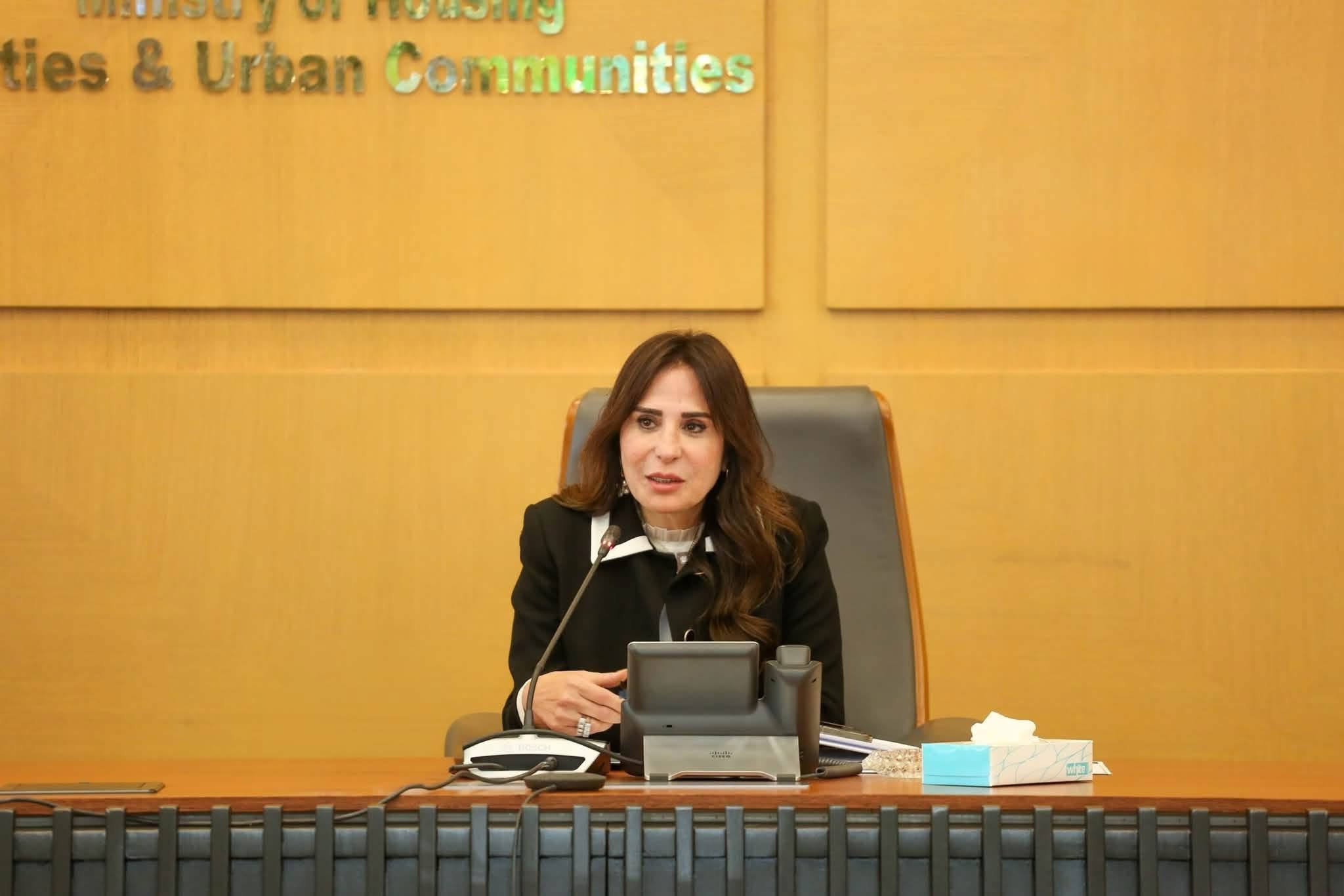
Engineer Randa El Menshawy, Minister of Housing, Utilities, and Urban Communities, announced that the Board of Directors of the New Urban Communities Authority (NUCA) has approved a new package of facilitations and regulatory measures governing land and property transactions, as well as public-private partnership projects in new cities.
The package aims to support the investment climate while safeguarding state rights and ensuring compliance with contractual obligations. The decision comes within the framework of the state’s directives to stimulate investment, simplify procedures for investors and clients, and enhance development rates in new cities.
The minister of housing said, “The state has made significant progress in creating an attractive investment climate, and the Ministry of Housing places the simplification of procedures for investors and clients among its top priorities to accelerate the implementation of urban and development projects.
These facilitations send a clear message that new cities have become promising and investment-friendly environments, supported by regulations that provide the necessary flexibility while preserving state rights, thereby advancing comprehensive development goals and Egypt Vision 2030.”
Accelerating Urban Projects and Increasing Development Rates
Engineer Randa El Menshawy emphasized that these facilitations reflect the ministry’s commitment to removing obstacles that may face investors, thereby supporting the faster implementation of urban projects and increasing development rates.
She noted that the ministry is working to strike a balance between encouraging investment and protecting state dues through clear and fair regulations applied equally to all.
The minister explained that the new decisions include extending several existing facilitations for one year while applying specific rates in selected new cities. The package includes discounts of up to 70% on unit ownership transfer fees and reductions of up to 90% on land transfer fees, depending on plot size.
These facilitations apply in the cities of 10th of Ramadan, Hadayek Al Ashar, New Obour, New October, and the Upper Egypt cities. A 50% reduction will also apply to all land plots of various activities and sizes in the remaining new cities, except for land located within the Northwest Coast region.
Practical Solutions and Procedures to Address Technical Obstacles
The minister noted that the package also introduces practical solutions and procedures to address technical obstacles that may hinder project implementation in new cities, such as construction debris, electricity cables, high-voltage power lines, gas pipelines, electrical transformers, or delays in connecting essential utilities. These measures are intended to protect investors’ rights and ensure uninterrupted project implementation.
The facilitations include granting investors an additional implementation period equivalent to the duration of the verified obstacle and its actual impact on project execution, with a maximum extension of one year. Investors will also be exempt from late payment penalties on land-related financial dues during the verified period in which the obstacle affected implementation.
Any applicable late penalties will only begin to accrue from the date the obstacle is removed, subject to specific technical standards and regulations. The Minister clarified that benefiting from these facilitations requires proof of the obstacle and its direct impact on the project through the relevant technical departments.
The minister also announced a new package of exceptional facilitations for debt settlements and reducing financial burdens on clients to help reactivate projects and accelerate implementation rates in new cities while preserving state rights.
The package includes a 70% exemption from late payment penalties upon full settlement of overdue financial dues within three months from the date of the announcement. This applies to residential, administrative, professional, and commercial units, as well as all types of land plots for various activities and beach units.
In addition, clients will receive a full 100% exemption from late payment penalties on the final installment if it is paid within three months from the announcement date. The minister explained that these facilitations apply only to active allocation cases and to residential units whose allocations were canceled during 2024, 2025, or 2026 solely due to non-payment, provided the client remains in possession of the unit or land and withdraws any legal cases filed against the authority.
The minister confirmed that certain cases are excluded from the penalty exemption package, including outstanding down payment completion amounts, partnership-based land allocations, land plots whose allocations have been canceled and officially repossessed by the city authority, and land located within the Northwest Coast region.
The facilitations also do not apply to land plots subject to suspended transactions under Committee No. 102 dated July 30, 2025, in accordance with the approved governing regulations. The package also sets the discount rate (applicable interest rate) used when calculating the net present value (NPV) of service and investment land offered by investors and real estate developers at 15% for all land types and activities.
This applies to both cash and in-kind payment mechanisms for land announced after the board’s approval or allocated by competent authorities under the same payment mechanism. Engineer Randa El Menshawy added that a new set of regulations has also been approved to govern cases involving the cancellation of land and property allocations.
The regulations specify that allocations will be canceled in cases of non-payment of two consecutive installments, one installment plus part of another installment, one installment plus a rescheduled installment payment, or two payments resulting from the rescheduling of an installment, as well as one installment plus the concurrent installment covering differences arising from the initial price, exchange rate, and area adjustments.
The minister stressed that partial payment of an installment will not be considered full payment, ensuring compliance with contractual obligations and protecting the authority’s financial rights.
Regarding developer replacement cases or project transfers, the minister stressed the necessity of paying the prescribed fees and obtaining prior official approval from the Authority while complying with the governing regulations for real estate transactions and board decisions.
These measures ensure that projects continue legally and in an organized manner, reinforcing transparency and discipline while balancing the protection of public funds with the creation of a stable investment environment that supports sustainable urban development in new cities.
New Financial and Procedural Regulations to Support Project Completion in New Cities
The minister of housing also announced new financial and procedural regulations aimed at supporting the completion of projects in new cities by providing greater flexibility in dealing with the authority’s financial dues while preserving state rights.
The regulations organize the assignment of financial receivables by requiring that the payment currency match the currency of the financial obligation. The related SWIFT transfers or receivables must have been deposited into the authority’s account within the deadline specified for completing the down payment or installment payments according to the allocation decision, or before that deadline.
Such amounts will bear the applicable financial charges from the due date until the submission of the assignment request, without prejudice to the Authority’s right to take actions stipulated in the real estate regulations and Board decisions. The package also introduces an administrative fee of 1% of the receivable value for reviewing assignment requests, promoting greater financial discipline.
Engineer Randa El Menshawy affirmed that the ministry is implementing a clear vision aimed at making new cities more attractive and competitive investment destinations. She noted that the new package responds to market requirements and sends a message of confidence and reassurance to serious investors.
She added that the Ministry of Housing is committed to providing a stable and secure investment environment and considers investors to be key partners in the development process. The ministry seeks to implement a balanced package that combines facilitation and incentives with discipline and the protection of rights, ensuring the continued momentum of development.
She also emphasized that the ministry will continue reviewing and developing its real estate policies in line with economic changes and market needs, thereby strengthening the competitiveness of Egypt’s real estate sector both locally and regionally.
For his part, Dr. Walid Abbas, Deputy Minister of Housing for Urban Communities, said the new package represents a qualitative shift in the mechanisms for dealing with investors and clients, as it is based on practical and flexible solutions to address the challenges projects may face while fully maintaining the regulatory framework governing the market.
He explained that the new decisions are designed to provide greater certainty and stability for investors, giving them practical tools to complete their projects without exceptional financial burdens while ensuring clear rules and obligations that enhance confidence in Egypt’s real estate market.