
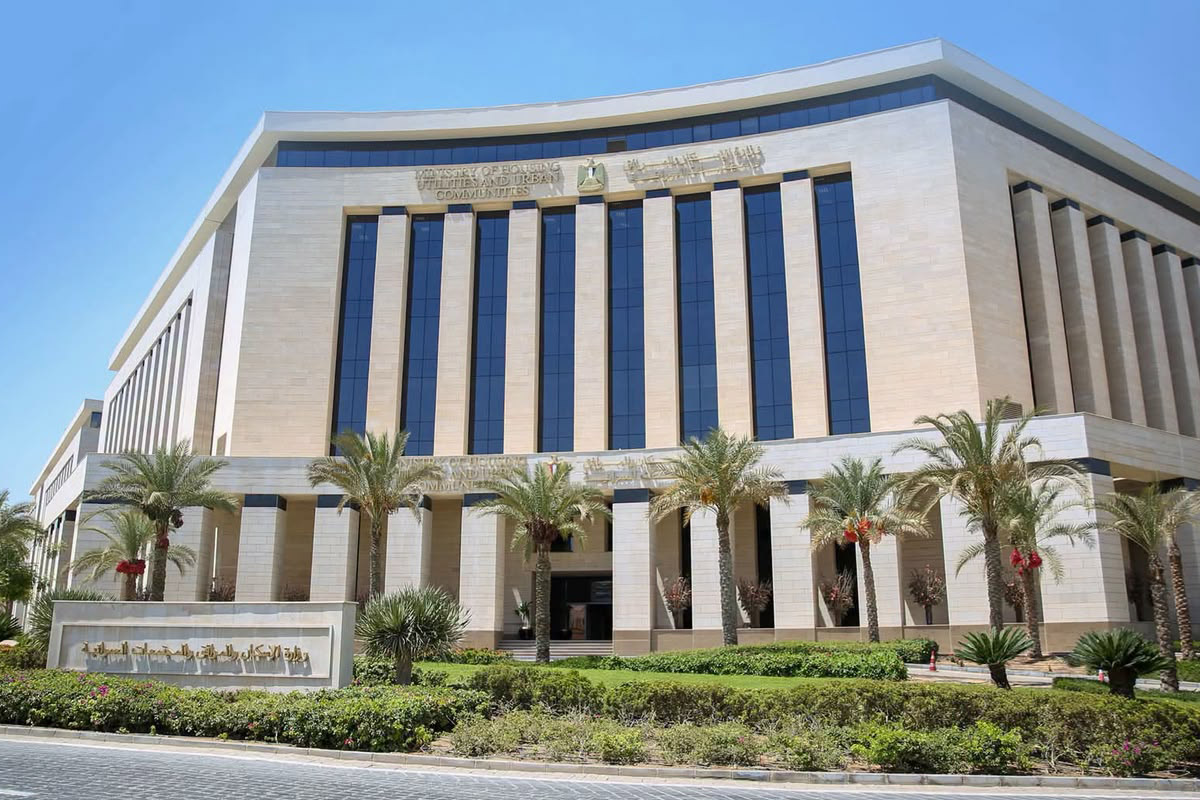
As part of the directives of Eng. Randa El-Menshawy, Minister of Housing, Utilities, and Urban Communities, to strengthen integrated urban planning for new cities, the Ministry of Housing, through the New Urban Communities Authority (NUCA), reviewed the outcomes of the first and second phases of the West Cairo Region Spatial Development Strategy (West Cairo Region 2040), along with the integrated mobility plan for Sheikh Zayed City.
The review took place during a meeting between ministry officials and an expanded World Bank field mission. The meeting aimed to follow up on the implementation of the Integrated Urban Management and Land Management in New Cities Project. The project is being studied in cooperation with the Swiss State Secretariat for Economic Affairs (SECO) and the World Bank, in direct coordination with NUCA.
In this regard, Dr. Walid Abbas, Deputy Minister of Housing for Urban Communities, emphasized that these projects represent a practical model of the state’s approach to multipolar regional planning. He stressed the importance of establishing clear implementation frameworks for financing and governance to ensure that the strategies move from planning to actual implementation.
Dr. Hend Farouh, Head of the Technical Affairs and Sustainable Development Sector, explained that combining the regional strategy with sustainable mobility plans reflects an integrated approach. This approach links long-term planning with practical implementation measures.
Dr. Ahmed Ismail Gabr, Assistant Vice President of NUCA for Planning and Projects and Executive Director of the Central Unit for Sustainable Cities, also noted that discussions are underway on sustainable urban development based on Geographic Information Systems (GIS). This is one of the key components of digital transformation in new cities, alongside ongoing spatial planning efforts.
The studies highlighted several important developments and economic benefits. The development scenario for the West Cairo Region aims to accommodate approximately 4 million people by 2040 while creating between 170,000 and 200,000 job opportunities.
This scenario also focuses on diversifying the economic base to include advanced industries, logistics services, and tourism. This will strengthen the region’s position as a national economic hub and help ease pressure on Greater Cairo.
At the level of Sheikh Zayed City, the integrated mobility plan aims to increase the share of public transportation to 35% by 2040, while reducing carbon emissions by 244,000 tons annually.
The plan is also expected to increase public transportation ridership by approximately four times and cut traffic congestion by half. These improvements will enhance residents’ quality of life and reduce travel times while delivering positive economic returns from the investment program.
At the conclusion of its work, the expanded mission reviewed progress across the various areas of cooperation. The parties agreed on a clear roadmap to complete the remaining work on both projects. These coordination efforts prepare the way for the implementation phase and the activation of the investment program.
They also reaffirm the Ministry of Housing’s commitment, in cooperation with the World Bank, to translating these strategic visions into tangible results that support the national direction toward building smart and sustainable cities.