
Engineer Randa El-Menshawy, Minister of Housing, Utilities, and Urban Communities, reviewed the progress of implementation of 37 solar power stations installed atop several residential buildings under the presidential initiative “Housing for All Egyptians,” within the low-income housing sector in Hadayek Al-Asima City.
Each station has a capacity of 3 kW/hour as part of ongoing efforts to rationalize energy consumption and expand reliance on renewable energy sources.
Housing for All Egyptians
The Minister of Housing emphasized that the state is pursuing a comprehensive urban vision aimed at reinforcing sustainable development principles and improving the quality of life for citizens. This is being achieved through the application of international standards for green infrastructure and the adoption of flexible policies to address climate change.
These measures contribute to transforming both new and existing cities into healthy, environmentally friendly urban environments while reducing pollution and ensuring that environmental and health benefits reach all beneficiaries of national projects and presidential initiatives, particularly the “Housing for All Egyptians” initiative.
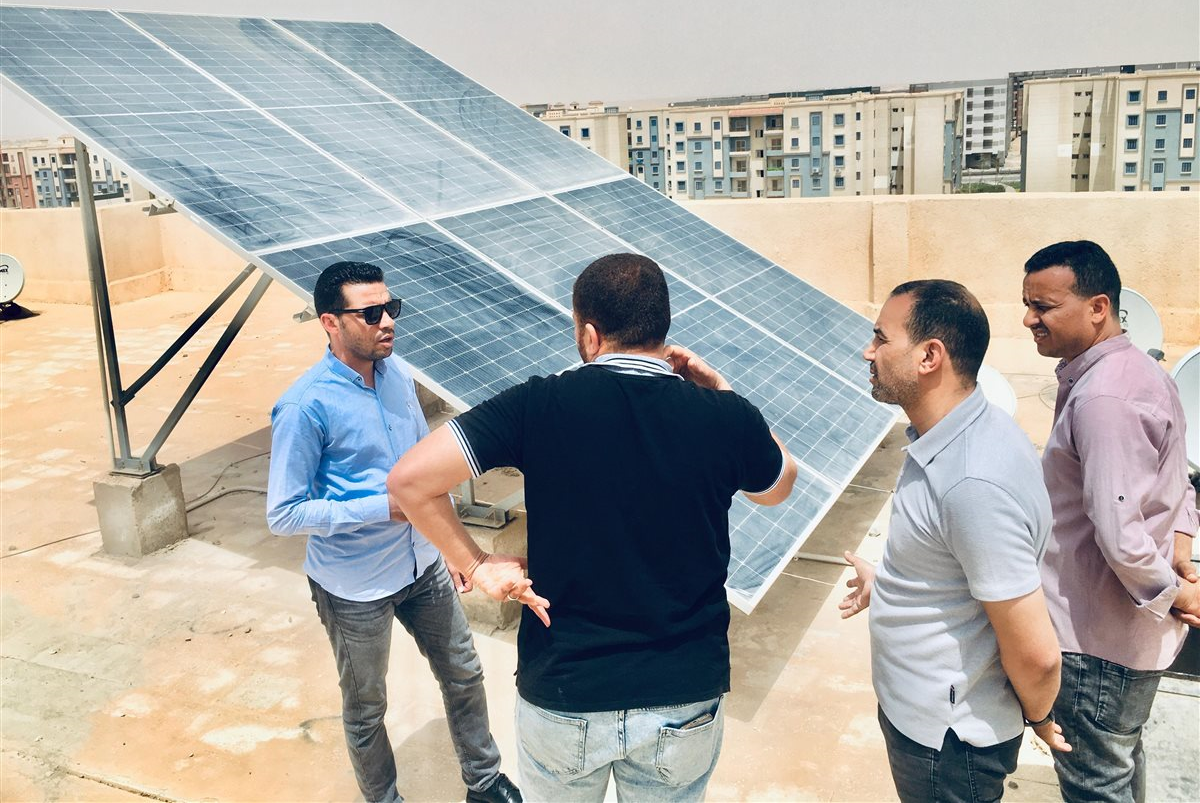
She further noted that the project is part of the implementation of the National Strategy for Green Urban Development and Construction, serving as a model for projects that support sustainability standards in new cities. She added that such initiatives represent a qualitative shift in Egypt’s urban development toward a more efficient and sustainable approach to resource utilization.
The minister also pointed out that with the continuous expansion of urban areas and the growing demand for housing and services, it has become necessary to develop an urban model that promotes efficient energy use while ensuring a high quality of life for present and future generations.
For his part, Engineer Ahmed El-Araby, Head of the Hadayek Al-Asima City Authority, stated that all installation works for the solar power stations have been completed and connected to building lighting and service systems.
He added that trial operations were conducted in coordination between the city authority, the consultant, and the executing company, noting that coordination was also carried out with the Canal Company for Electricity Distribution to install net metering (exchange) meters.
He explained that the stations operate under an “on-grid” system, where they are connected to the electricity grid through a net meter. He added that several buildings were selected for the installation of small rooftop solar power systems to utilize the generated energy for internal building lighting and services, as well as general site lighting.
He also noted that these stations were implemented through a grant affiliated with the World Bank Fund in favor of the Social Housing and Mortgage Finance Fund, as part of the Green Housing Initiative.