
Engineer Randa El Menshawy participated in the activities of the 6th edition of the Akhbar El-Youm Real Estate Conference, which was held under the theme “The Egyptian Real Estate Industry: Attractive Investments and Promising Opportunities.”
The minister expressed her satisfaction with participating in this year’s edition, highlighting that the conference has evolved into a key national platform for discussing the future of real estate and urban development in Egypt.
She also extended her appreciation to the long-established Akhbar El-Youm Foundation for its continued efforts in organizing the event annually, which consistently supports national dialogue on development, urban planning, and investment-related issues.
She noted that this year’s theme, “The Egyptian Real Estate Industry: Attractive Investments and Promising Opportunities,” accurately reflects the current stage of Egypt’s real estate sector, which is experiencing remarkable progress across multiple dimensions, including the expansion of projects, diversification of investment opportunities, and a clear shift toward more sustainable, smart, and competitive urban development models.
El Menshawy stated that Egypt has witnessed a comprehensive urban renaissance in recent years under the leadership of Abdel Fattah El-Sisi, aimed at restructuring the country’s urban map and establishing integrated cities capable of accommodating population growth, supporting economic development, and improving citizens’ quality of life.
She added that this vision has enabled the state to significantly expand inhabited areas, establish fourth-generation cities, upgrade infrastructure systems, and implement large-scale housing projects across all segments. In addition, several national mega-projects have been launched, serving as models for modern urban development.
She emphasized that the real estate sector has become one of Egypt’s most attractive investment destinations and a major driver of the national economy due to its direct and indirect job creation and its connection to more than 100 related industries and economic activities.
The minister stressed that the ongoing growth in the real estate sector requires ensuring its sustainability, strengthening competitiveness, and improving the efficiency of the overall system. She explained that the Ministry of Housing, Utilities, and Urban Communities is working through several strategic pillars, foremost among them enhancing partnership with the private sector as a key development partner.
She further pointed out that sustainable development depends on the integration of roles between the government, investors, and real estate developers. The Ministry, she noted, has recently expanded investment opportunities and introduced diverse partnership models to accelerate development rates, maximize the use of state assets, and achieve a balanced relationship between development objectives and economic returns.
She stated: “We are committed to creating a more flexible and attractive investment environment based on transparency and clarity, which strengthens the confidence of both local and foreign investors in the Egyptian real estate market, especially given the vast potential and promising opportunities available across new cities and development zones.”
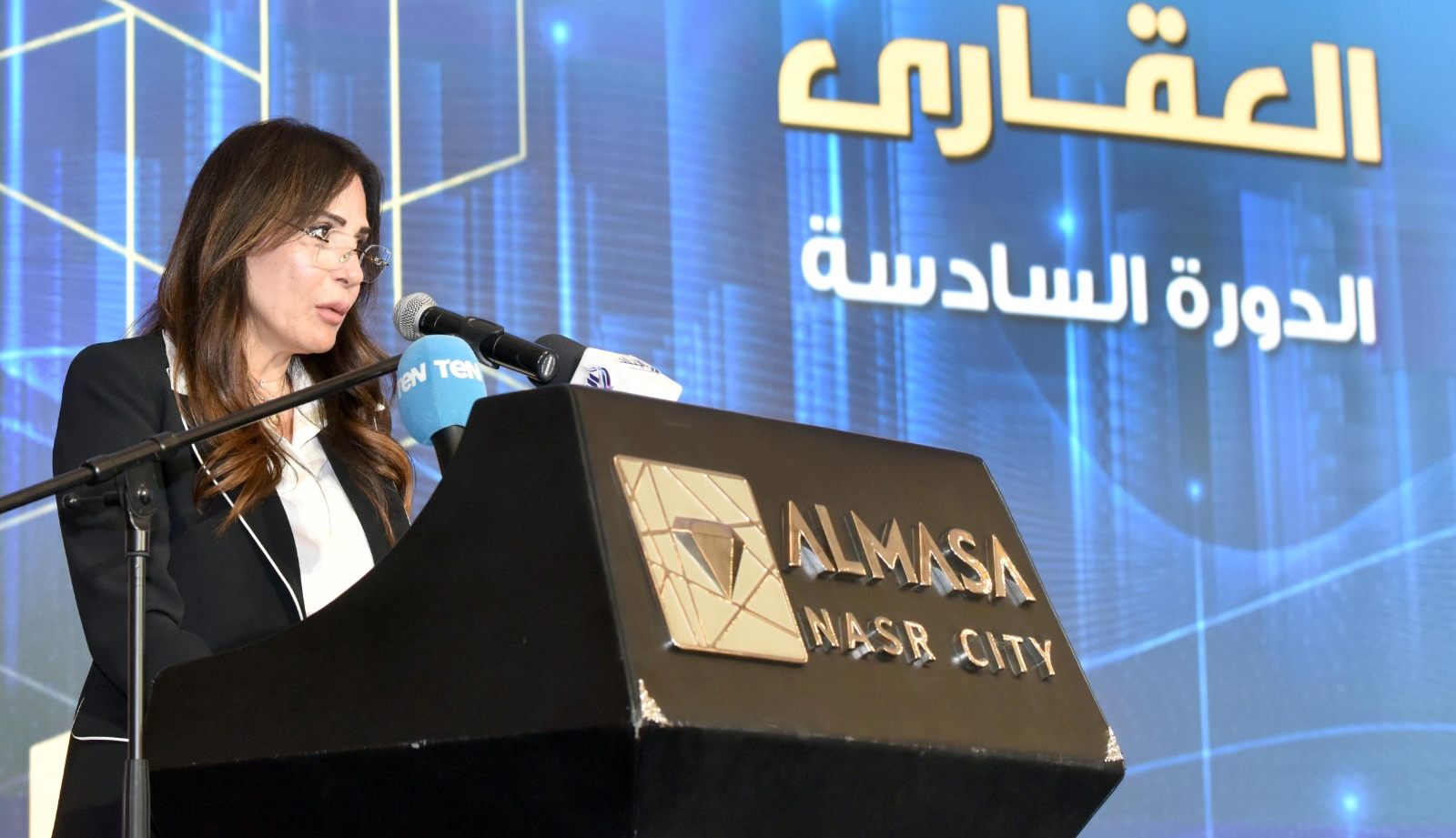
She also emphasized the ministry’s ongoing efforts to enhance the legislative and regulatory framework governing the real estate sector in line with rapid market changes. This aims to organize and regulate the market, protect the rights of all stakeholders, and maintain balance between developers, citizens, and investors.
She added that the Ministry is also modernizing work systems, advancing digital transformation, simplifying procedures, and improving governance and transparency to strengthen the overall business environment.
The minister noted that the Egyptian state views real estate as a strategic sector with strong future growth potential, particularly with the continued expansion of new urban cities as a cornerstone of sustainable development.
She explained that these cities have evolved beyond being purely residential areas, becoming fully integrated urban environments that provide opportunities for living, working, and investing. They include educational, healthcare, and recreational services, as well as industrial, commercial, and logistics zones, contributing to balanced population distribution and nationwide development.
She also highlighted the increasing demand for mixed-use developments that combine residential, commercial, administrative, and entertainment components within integrated urban frameworks. This trend reflects changing lifestyles and market needs, emphasizing modern urban planning concepts centered on quality of life, sustainability, and efficient resource utilization.
The Minister further pointed out that coastal and tourism development areas represent some of the most promising opportunities for Egypt’s real estate sector, given the country’s unique geographic advantages along the Red Sea and Mediterranean coasts.
She noted that the state has prioritized the development of coastal regions through integrated urban and tourism projects aimed at enhancing competitiveness, attracting investment, supporting economic growth, and creating job opportunities.
In this context, she said that several emerging coastal cities, including New Alamein City, have become leading examples of modern development, featuring advanced infrastructure and a wide range of tourism, residential, and service projects that strengthen Egypt’s economic position and enhance its regional and international investment appeal.
She confirmed that the Egyptian real estate market is witnessing growing interest from regional and global investors, supported by economic stability, available opportunities, and the large-scale national development projects currently underway.
She added that ongoing economic reforms, improved investment conditions, and upgraded infrastructure have significantly boosted investor confidence and opened new avenues for partnerships across various urban development sectors.
The minister further explained that Egypt’s urban expansion is closely linked to major advancements in infrastructure and transportation networks, which serve as the foundation for attracting investment and driving development.
The state has implemented extensive national projects involving roads, axes, bridges, and expanded utilities such as water, sanitation, energy, and telecommunications, all of which have improved the quality of life and strengthened connectivity nationwide.
El Menshawy concluded that what has been achieved on the ground demonstrates Egypt’s steady progress toward building a sustainable and integrated urban future based on scientific planning, strong partnerships, and investment in both people and infrastructure.
She added that the success of the real estate sector depends on true integration between the state, private sector, financial institutions, developers, and national media—an approach embodied by this conference.
She reaffirmed the Ministry’s commitment to continuing dialogue with all development partners and working collaboratively to enhance the competitiveness of Egypt’s real estate market, create an attractive investment climate that supports economic growth, generates employment opportunities, and contributes to building modern, sustainable cities aligned with the goals of the New Republic.