
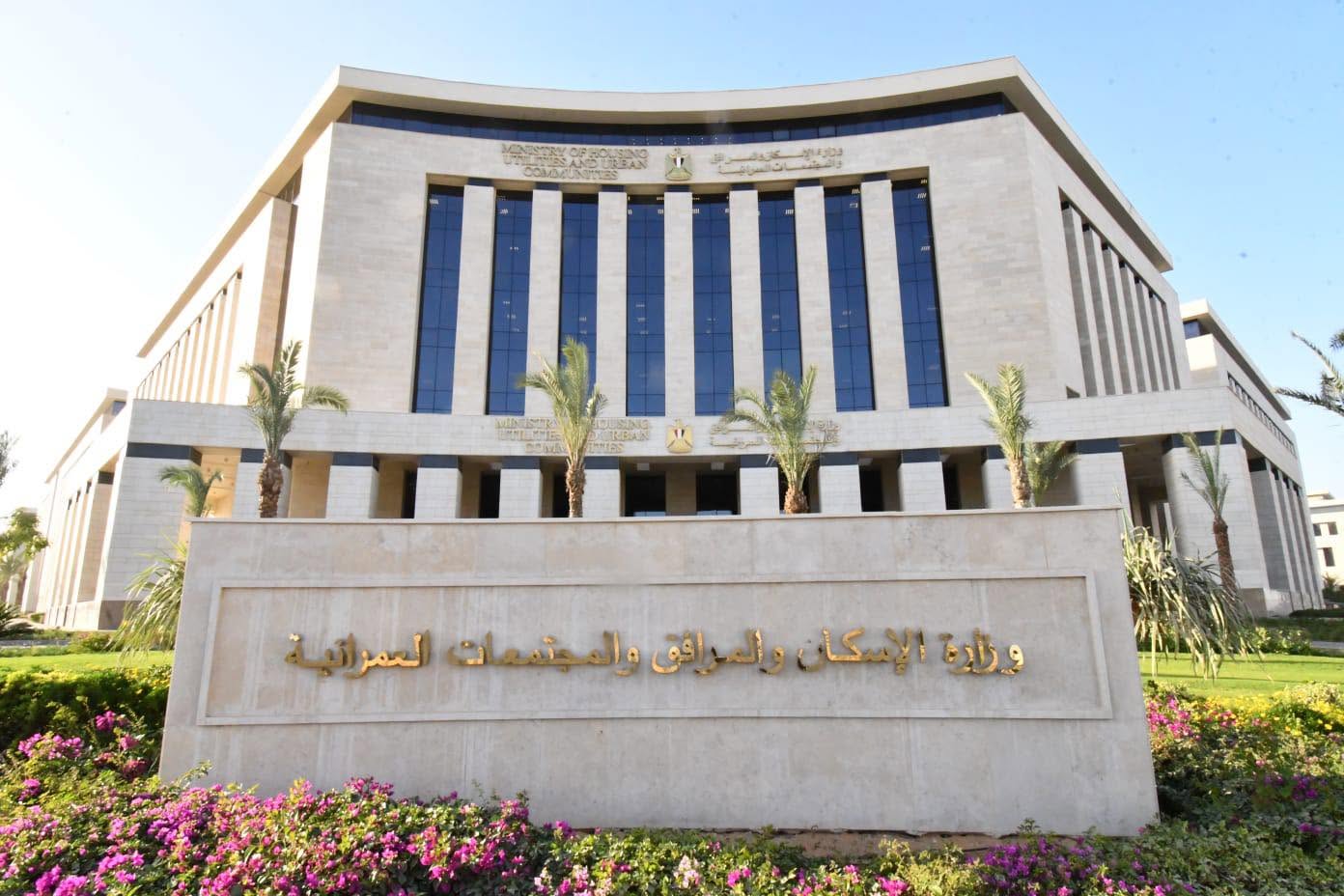
Engineer Randa El-Menshawy, Minister of Housing, Utilities, and Urban Communities, participated in the second plenary session, “Building Egypt’s Future Cities: Investment, Infrastructure, and Integrated Communities,” during the “Egypt of the Future: Investment Opportunities and Sustainable Economic Reform” conference. The event was organized by the Egyptian British Business Association (BEBA) and took place in London, United Kingdom, from June 3 to 5, 2026.
The session explored the main components of Egypt’s National Urban Development Strategy and the plan for developing new cities. Discussions also focused on public-private partnership (PPP) opportunities in infrastructure and urban services, in addition to investment prospects for real estate developers, operators, and investment institutions.
During her remarks, the minister highlighted that Egypt has made unprecedented investments in new city development and infrastructure in recent years, creating a strong foundation for a new stage centered on maximizing economic and investment returns.
She noted that current opportunities span integrated urban development projects, mixed-use developments, hospitality, education, healthcare, asset management, and operations, as well as infrastructure and service projects in cities that already possess integrated infrastructure and strong growth potential.
She further explained that the government has adopted a clear strategy to reinforce the private sector’s role as a primary development partner. This approach includes expanding partnership frameworks, enhancing land allocation systems, streamlining procedures, and improving the overall investment climate.
According to the minister, a key advantage of the current phase is that investors are entering fully established cities rather than cities still under construction. These cities already offer modern infrastructure, comprehensive services, and rising demand, creating more mature opportunities and sustainable returns. El-Menshawy stated that the coming period will see the introduction of a broad range of investment opportunities extending beyond the traditional land-sale model.
These opportunities will encompass integrated urban projects in new cities; the development and management of central and commercial districts; hospitality, hotel, and tourism ventures; educational and healthcare projects; utilities and infrastructure developments; asset management and operational initiatives; and coastal development projects—particularly along the North Coast and in New Alamein City—as well as projects aimed at revitalizing areas with historical and heritage significance.
She emphasized that many of these opportunities are being designed through partnership and long-term investment frameworks to secure sustainable returns for investors. She added that the government’s vision focuses on increasing the private sector’s contribution to the national economy and enabling it to drive growth and investment, while the state concentrates on strategic planning, infrastructure development, and fostering a competitive, investor-friendly environment.
The minister stressed that the opportunities currently available go far beyond simply offering land for development. Instead, they represent integrated urban and economic ecosystems that enable investors to access established markets rapidly through a transparent regulatory structure and long-term partnerships that deliver mutual benefits to both investors and the state.
Randa El-Menshawy noted that the New Administrative Capital, New Alamein City, and New Mansoura City currently rank among Egypt’s most mature and investment-ready destinations. This is the result of substantial investments made to complete infrastructure and essential utilities according to the highest standards, alongside the presence of existing assets, operational projects, and clearly defined regulatory and institutional frameworks governing investment activities.
She pointed out that these cities are supported by advanced road networks and highly efficient utility systems, while benefiting from strong and expanding demand drivers. These include targeted population growth, established governmental, economic, and service activities, as well as the presence of universities, schools, educational institutions, healthcare facilities, and a wide range of services. Their strategic locations further strengthen opportunities for real estate, tourism, and commercial investments.
The minister explained that choosing the most suitable city depends largely on the nature of the investment. Certain cities, including those in Cairo and Giza, New Alamein City, and New Aswan City, offer significant potential for hospitality investments.
Meanwhile, strong urban development opportunities can be found in the New Administrative Capital, New Alamein City, New October City, and several other cities, each possessing distinct competitive advantages. She also emphasized that transparent and clearly defined land allocation and ownership mechanisms help enhance investor confidence and speed up project implementation.
El-Menshawy affirmed that over the past several years, the government has worked to simplify procedures and unify investor interactions through the New Urban Communities Authority, reducing the time needed to complete administrative requirements.
For projects offered through public-private partnership models, she explained that the process begins with identifying the investment opportunity and negotiating the contractual framework before implementation begins.
She further noted that the government utilizes a comprehensive set of indicators to assess actual demand and activity levels within new cities. These indicators include occupancy and permanent residency rates, the scale of economic activities and newly generated jobs, utilization levels of educational, healthcare, and commercial services, private-sector investment volumes, and daily movement patterns of residents and visitors.
The minister stated, “We do not regard new cities solely as real estate developments; rather, we view them as integrated economic and urban centers. Their success is measured by their capacity to attract residents, investments, employment opportunities, and services on a sustainable basis.
Consequently, the state is concentrating on improving quality of life and attracting economic and service activities alongside urban development to ensure that these cities evolve into vibrant, fully operational centers rather than simply residential settlements.”
Concluding her remarks, the minister of housing said, “The challenge today is no longer the availability of investment opportunities. Egypt possesses one of the largest portfolios of urban development and infrastructure projects. The real challenge is ensuring faster, more efficient, and more flexible access to these opportunities. For this reason, the government is actively working to comprehensively enhance the investment ecosystem.
Egypt is not merely offering land—it is offering cities built on integrated visions and modern infrastructure, supported by investment opportunities backed by clear political commitment and long-term partnerships. We have now entered the phase of operation, investment attraction, and return generation.”