
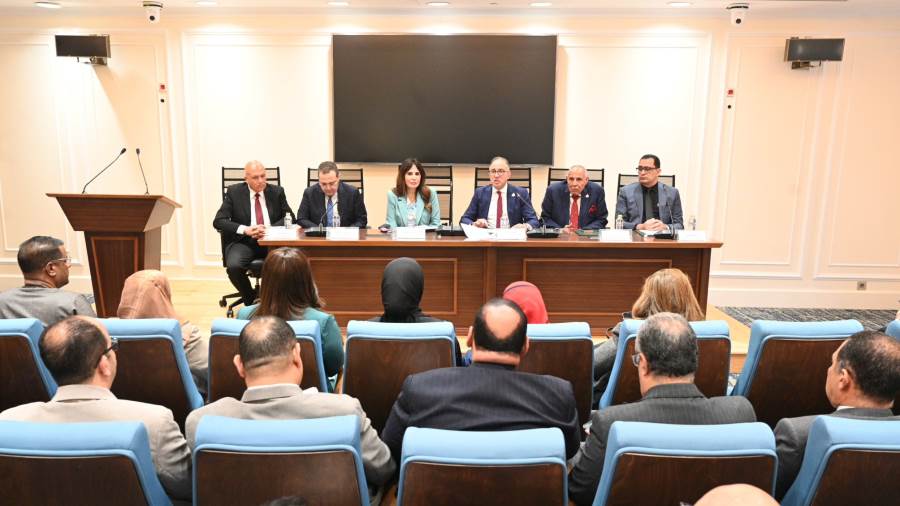
Engineer Randa El-Menshawy, Minister of Housing, Utilities, and Urban Communities, took part in a session of the Housing, Public Utilities, and Reconstruction Committee at the House of Representatives, chaired by MP Dr. Ahmed Shalaby. The session focused on outlining the ministry’s strategic vision for the upcoming phase, in line with the state’s efforts to accelerate urban development and enhance citizens’ quality of life.
The minister emphasized that the ministry is pursuing a more integrated and efficient approach to delivering suitable housing for all segments of society. This strategy is built on several core pillars, most notably expanding the urban footprint to achieve the objectives of Egypt Vision 2030.
She noted that the National Strategic Urban Development Plan (Egypt 2052) has been developed to strengthen infrastructure and establish new urban communities based on principles that promote balanced and sustainable growth, thereby improving living standards, creating jobs, and enhancing service delivery.
Egypt’s Urban Area Expands from 7% to 14% Between 2014 and 2026
The minister highlighted that Egypt’s inhabited area has grown from 7% in 2014 to 14% in 2026, with a target of reaching 17% by 2030. She also reviewed progress in housing projects, stating that around 1.96 million units have been delivered, including 1.508 million completed units, while approximately 349,400 units remain under construction.
Urban Expansion Targets Organized Growth
Randa El-Menshawy explained that the goal of urban expansion is to shift growth away from unplanned encroachment on agricultural land toward the development of new cities, ensuring sustainability and preserving resources.
This approach includes revising urban boundaries, preventing violations, and establishing rapid transportation links between existing and newly developed cities. It also focuses on optimizing the use of underutilized land within urban areas through precise geographic data systems.
Advancing National and Strategic Planning Frameworks
The minister also addressed the progress of national and strategic planning, including the approval of urban boundaries across 27 governorates. She noted that these efforts comply with Building Law No. 119 of 2008, which mandates periodic reviews and updates of strategic plans every five years to keep pace with economic, social, and urban developments.
Integrated System for Asset and Facility Management
Regarding the operation of new cities, the minister explained that the ministry is introducing a comprehensive asset and facility management system. This includes structured operational plans designed to accelerate development while offering incentives to boost commercial activity and attract investment.
A cooperation agreement has been signed between Modon Asset and Facility Management Company and the New Urban Communities Authority to deliver management, operation, and maintenance services in line with modern standards.
“Housing for All Egyptians” Presidential Initiative
The minister reviewed housing programs launched since 2014, targeting various segments of society. These include initiatives for low- and middle-income citizens under the presidential program “Housing for All Egyptians,” as well as alternative housing for unsafe areas, development of Nubian and Bedouin homes, desert hinterland housing, and development clusters in North and South Sinai.
Additional programs cover middle and upper-middle housing, green housing, luxury projects, fourth-generation cities, and partnerships with the private sector.
Organizing the Real Estate Development Sector
Randa El-Menshawy also highlighted measures to regulate the real estate sector, including updates to legislative and regulatory frameworks such as the Building Law, Reconciliation Law, and Advertising Regulation Law.
These efforts also involve implementing a classification system for developers, advancing digital transformation, introducing a unified real estate ID system, regulating landlord-tenant relations, and adopting smart city management technologies.
Housing Investments Reach EGP 714 Billion
The minister presented the proposed investment plan for 2026–2030, with total funding estimated at EGP 714 billion to support housing, utilities, and infrastructure projects. She also outlined the investment plan for the 2026/2027 fiscal year, with allocations of around EGP 414 billion, including approximately EGP 169.563 billion dedicated to ongoing sub-projects. This reflects the ministry’s commitment to accelerating execution and completion rates.
Finally, the minister confirmed that a quarterly monitoring system is in place to ensure projects are delivered on schedule, achieve high completion rates, and guarantee equitable distribution of projects across all governorates.