
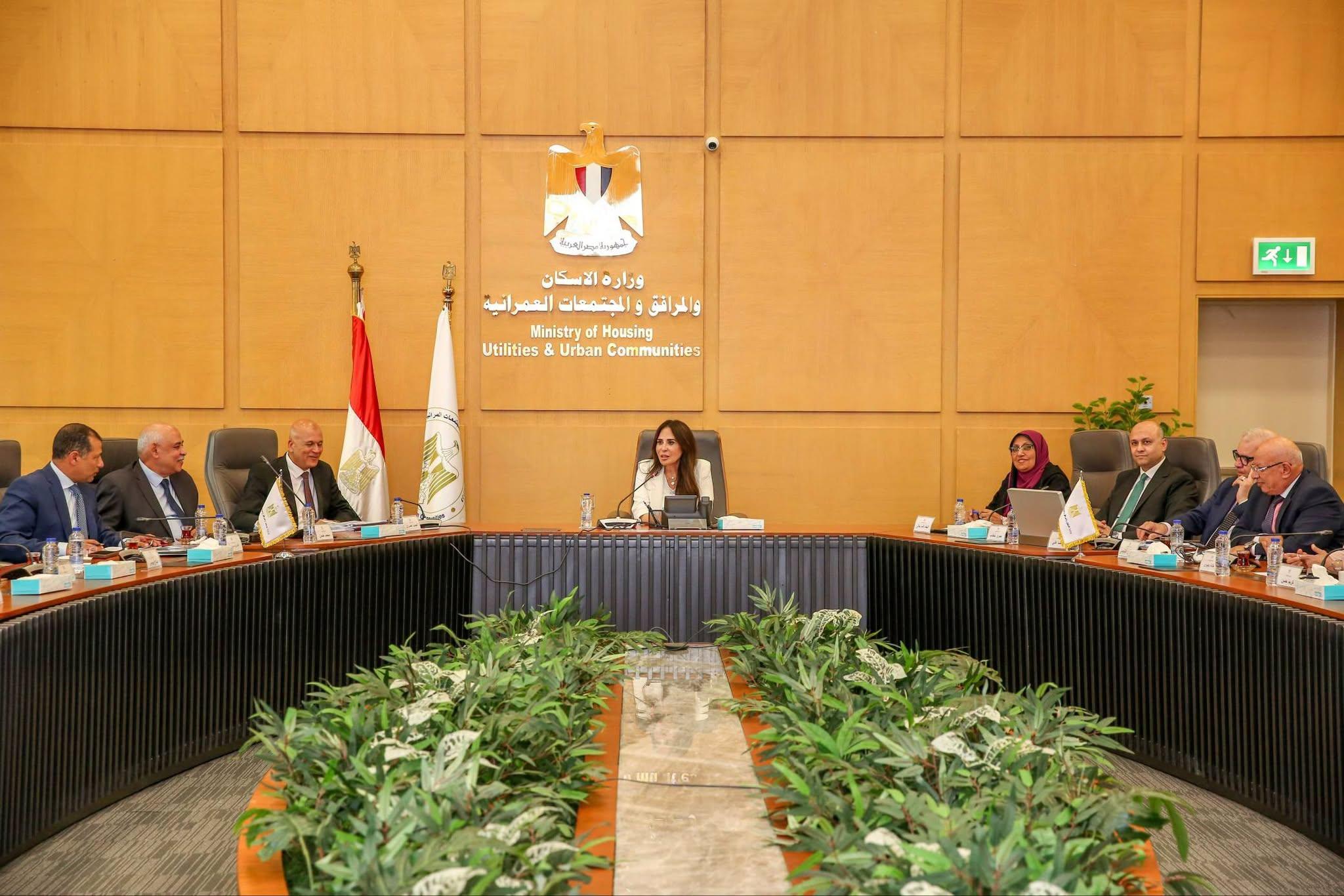
Eng. Randa El-Menshawy, minister of housing, utilities, and urban communities, chaired a meeting of the ministry’s utilities committee to follow up on the status of projects currently being implemented in the drinking water, wastewater, and utilities sectors in Cairo Governorate and New Cairo City, as well as the drinking water and wastewater systems serving the governorate and the city.
The meeting was attended by Eng. Ahmed Omran, deputy minister of housing for utilities, along with officials from the ministry, the New Urban Communities Authority, the ministry’s affiliated entities, and agencies concerned with drinking water and wastewater files.
At the beginning of the meeting, the minister of housing emphasized the importance of continuous follow-up of the drinking water and wastewater systems in Cairo Governorate and New Cairo City, as they are among the most important essential services that directly affect citizens’ lives. She stressed the need to maintain the efficiency and sustainability of the operating systems and improve the level of services provided to citizens.
Eng. Randa El-Menshawy pointed to the importance of proactively addressing the needs of areas witnessing urban and population growth, as well as the need for continuous coordination to ensure the provision of the necessary water requirements for citizens and new projects while upgrading existing networks and improving service levels.
The Minister of Housing directed adherence to the specified schedules for project implementation and increasing water bill collection rates for all residential, commercial, and administrative activities, contributing to strengthening the financial resources of the entities responsible for providing the service. She also directed addressing any observations related to the operation and maintenance system, if any, and improving water quality.
During the meeting, the design capacity of drinking water plants operated by the Cairo Drinking Water Company was reviewed, amounting to approximately 6.11 million cubic meters per day, in addition to drinking water networks extending approximately 13,000 km, with a coverage rate of 100%. The meeting also addressed the planning aspects of projects of the Cairo Drinking Water Company, including the investment plan and the replacement and renewal plan.
Key projects under the investment plan include the New Kafr El-Alw Water Plant with a capacity of 400,000 cubic meters per day; the expansion of the North Helwan Water Plant with a capacity of 200,000 cubic meters per day; the construction of the New Abu Oweikel Water Plant with a capacity of 450,000 cubic meters per day; and the construction of the Al-Nahda Pumping Station with a design capacity of 130,000 cubic meters per day through the Executive Authority for Potable Water and Wastewater.
The meeting also reviewed the water balance status of Cairo’s drinking water plants and expected future water needs in light of population growth and urban expansion rates. Challenges associated with increasing population densities and urban expansion were also reviewed.
Implementation Rates of Ongoing Projects
The meeting then addressed the status of the drinking water, wastewater, and electricity systems in New Cairo City, with the aim of reviewing the implementation rates of ongoing projects and plans for expansion and upgrading infrastructure efficiency in line with the city’s current and future needs.
In this regard, the general plan for the drinking water system in New Cairo City was reviewed. The system includes 20 pumping stations, comprising 15 drinking water pumping stations, 4 raw water pumping stations, and 1 irrigation water pumping station, in addition to the water treatment plant system.
The first phase of the New Cairo Water Treatment Plant has a design capacity of 500,000 cubic meters per day, with the second phase having the same capacity, while a third phase with a capacity of 500,000 cubic meters per day is still in the design stage.
The meeting also addressed the status of the city’s wastewater system, which includes 30 pumping stations, comprising 16 main pumping stations, 10 subsidiary pumping stations, and 4 treated water pumping stations, in addition to wastewater treatment plants, including the Orasqualia Treatment Plant with a design capacity of 250,000 cubic meters per day.
Regarding the status of connecting pumping stations to the Abu Zaabal line, the meeting reviewed the progress achieved at the main Shouwaifat and Banafseg stations, where the connection and operation were completed during June 2026, in addition to the status of the Yasmeen and Mirage stations and plans to complete the connection works and implement the main lines according to the specified schedules.
The meeting also addressed the electricity supply status for raw water pumping stations and the expansions of the Banafseg transformer substation. The capacity of the station allocated to supply Phases 2, 3, and 4 of the raw water pumping stations amounts to approximately 108 MVA, in addition to a capacity of 20 MVA for the Abu Oweikel Water Pumping Station. The implementation rate has reached 70%, with power already supplied to the station, while work is underway to energize the pumping stations.
In this context, the minister of housing stressed the importance of integration between drinking water, wastewater, and electricity systems to ensure that infrastructure is ready to accommodate urban and population growth rates in New Cairo City, improve the level of services provided to citizens, and maintain the efficiency and sustainability of the investments being implemented in the city.
She also directed the need for periodic follow-up of implementation rates and continuous coordination between the New Cairo City Development Authority and the concerned executive entities to overcome any obstacles that may face the projects and ensure the prompt entry of completed projects into service. This supports the state’s plans for sustainable urban development and enhances quality of life in new cities.
At the conclusion of the meeting, Eng. Randa El-Menshawy affirmed that the Ministry continues to implement its plans to develop and upgrade the efficiency of drinking water and wastewater systems in new cities and governorates, in line with the scale of ongoing urban development, while ensuring the efficient and sustainable provision of infrastructure services in accordance with the highest technical and operational standards.