
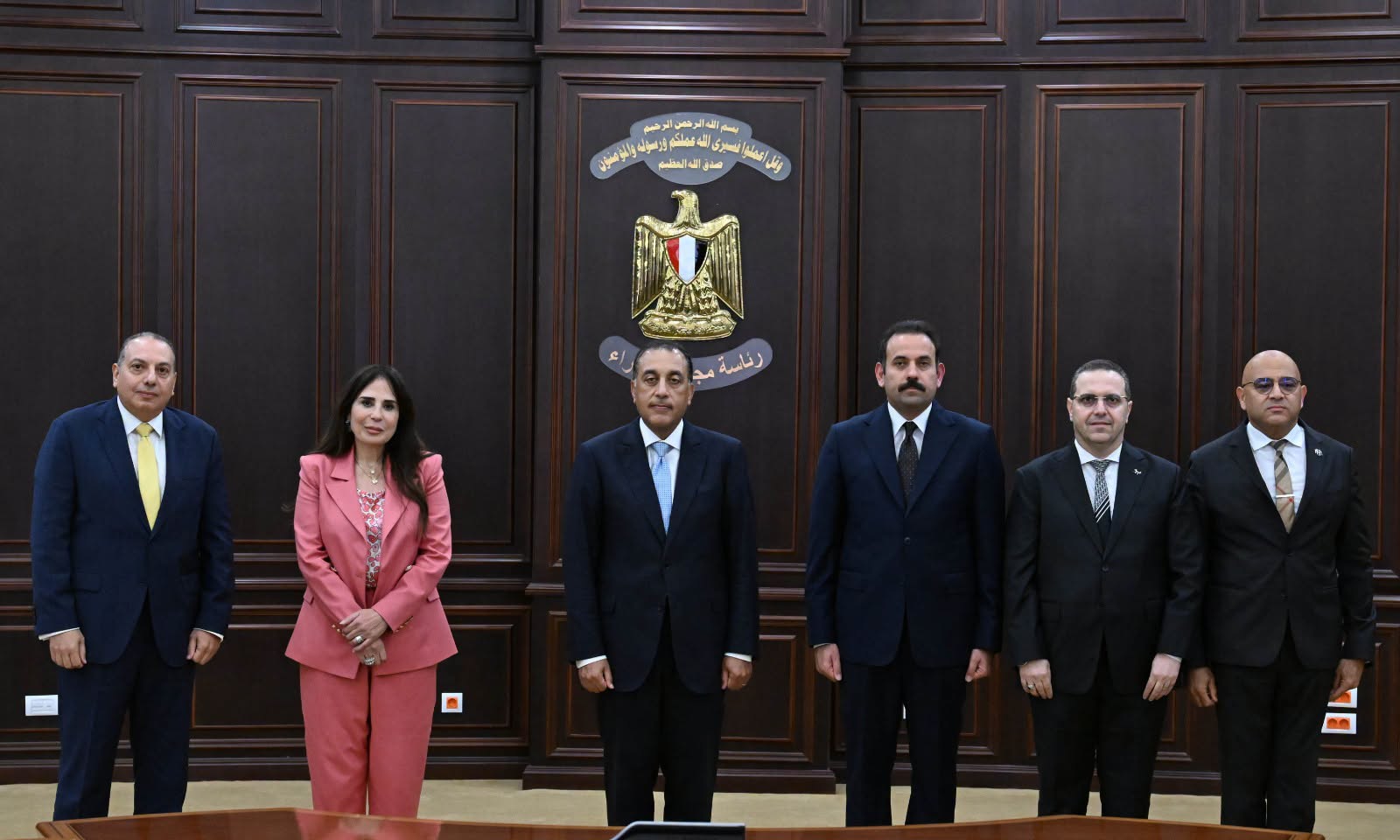
Dr. Mostafa Madbouly, Prime Minister, witnessed today, at the government headquarters in New Alamein City, the signing ceremony of an investment and shareholders agreement between “Madon Misr for Asset and Facility Management,” affiliated with the New Urban Communities Authority and the Future of Egypt Sustainable Development Authority, and “Mwasalat Misr,” in which the National Bank of Egypt is a shareholder, to establish “Mwasalat Modon Misr.”
The new company will operate and manage the smart and sustainable transportation system within new urban communities. The ceremony was attended by Eng. Randa El-Menshawy, minister of housing, utilities, and urban communities; Dr. Bahaa El-Ghannam, executive director of the Future of Egypt Sustainable Development Authority; Dr. Walid Abbas, deputy minister of housing, utilities, and urban communities for new urban communities; and Mohamed El-Etreby, CEO of the National Bank of Egypt.
The agreement was signed by Eng. Mohamed Mahmoud Abou Taleb, CEO of Madon Misr for Asset and Facility Management, and Hesham Ahmed Taha, CEO and Managing Director of Mwasalat Misr, as part of a partnership aimed at establishing Mwasalat Modon Misr to operate and manage smart urban transportation services within new urban communities, in accordance with the latest operational and technological systems, supporting the state’s efforts to develop the transportation system and improve the quality of services provided to citizens.
The signing of the agreement comes as a continuation of joint coordination between the Ministry of Housing, Utilities, and Urban Communities and the Future of Egypt Sustainable Development Authority to provide a modern and sustainable urban transportation system within new cities. The system will rely on digital solutions and smart operating systems, keeping pace with the urban expansion taking place across the country, enhancing quality of life, and supporting sustainable development objectives.
Under the agreement, “Mwasalat Modon Misr” will operate and manage the transportation system in the targeted cities through a modern fleet comprising 200 new vehicles, in addition to establishing an integrated fleet management and operation system that includes central and branch control rooms, electronic equipment for vehicles, stations and garages, and an electronic payment system in cooperation with the National Bank of Egypt, ensuring the provision of smart, safe, and sustainable urban transportation services.
The agreement also includes providing an integrated insurance system for vehicles and passengers, implementing specialized programs to qualify and improve the efficiency of drivers and employees, as well as training technical and administrative personnel in accordance with the latest international standards, thereby enhancing operational efficiency and service sustainability within new urban communities.
The project is based on a modern operating model aimed at improving the efficiency of the urban transportation system and achieving the highest levels of quality while allowing for gradual expansion to cover more new urban communities. This supports the state’s vision of building a smart and sustainable transportation system integrated with infrastructure projects and national transportation networks, contributing to the objectives of Egypt’s Vision 2030.
Following the signing, Eng. Randa El-Menshawy, minister of housing, utilities, and urban communities, affirmed that establishing “Mwasalat Modon Misr” represents an important step toward developing the transportation system within new cities and providing modern, safe, and sustainable means of transportation that meet the growing rates of urban and population expansion in these cities. She noted that providing an efficient and integrated transportation system is one of the key elements for achieving integrated urban development and enhancing citizens’ quality of life.
The Minister of Housing explained that the new system will rely on the latest technological solutions and smart management and operating systems, contributing to improving the efficiency of transportation services, enhancing the user experience, and achieving integration among various modes of transportation within new cities.
She stressed the importance of gradually expanding the service to cover more cities in parallel with the state’s urban expansion plans, supporting the transition toward smart and sustainable cities and enhancing the ability of new urban communities to accommodate more residents, activities, and investments.
For his part, Dr. Bahaa El-Ghannam, executive director of the Future of Egypt Sustainable Development Authority, affirmed that establishing “Mwasalat Modon Misr” reflects the authority’s approach toward developing sustainable investment models in partnership with the private sector, contributing to the development of services within new urban communities in accordance with the highest operational standards.
He added that the authority is working to maximize the utilization of assets and investment opportunities by establishing economic entities capable of providing advanced services that create added value for the state and citizens, enhance facility management efficiency, improve quality of life, and keep pace with urban development objectives and Egypt’s Vision 2030. He affirmed that the coming period will witness the expansion of this model in partnership with national institutions possessing the expertise and capabilities needed to achieve the best economic and operational returns.
“Mwasalat Modon Misr” represents a public-private partnership model for managing and operating urban transportation services, drawing on specialized operational expertise and an integrated institutional structure. This supports the expansion of sustainable transportation services within urban communities and enhances integration with national transportation projects while providing an operational model that can be expanded across various new cities.
The model will contribute to improving service efficiency, maximizing the utilization of assets, and achieving sustainable economic returns, in line with the state’s objectives of developing the transportation system and supporting urban development.