
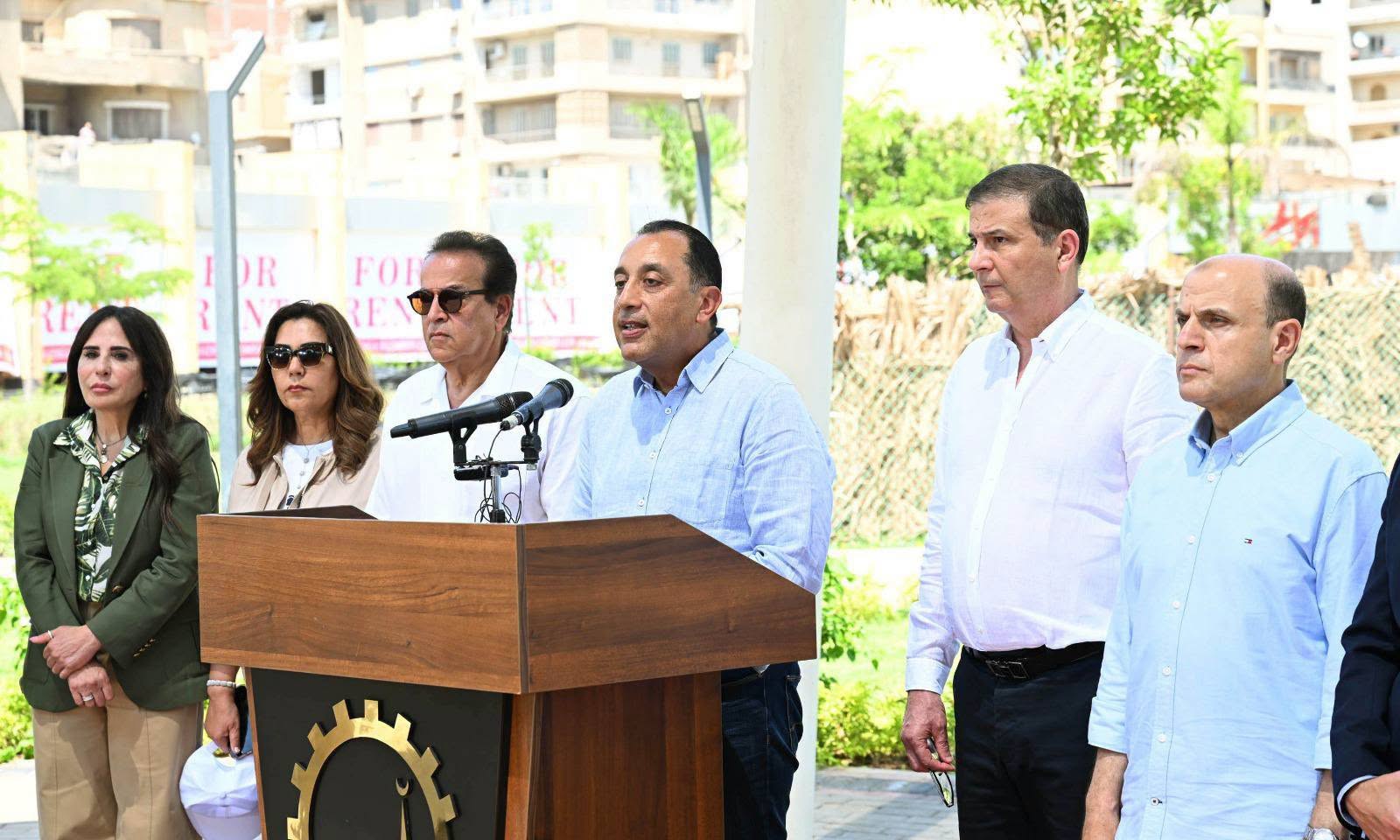
Prime Minister Dr. Mostafa Madbouly held a press conference at the conclusion of his visit to Gharbia Governorate, where he inspected and inaugurated several service and development projects in the presence of senior government officials and Gharbia Governor Major General Dr. Alaa Abdel Moaty.
Madbouly expressed his happiness at witnessing the results of the major efforts made to implement the presidential “Hayah Karima” initiative, describing it as Egypt’s project of the 21st century. He announced that the final steps toward completing the initiative’s first-phase projects in Gharbia have been reached, with projects either already received or currently being received in preparation for their full operation.
He noted that Gharbia is among the governorates where the status of the first-phase projects has been completed, while other governorates will announce completion over the coming weeks.
The Prime Minister said state funding for the first phase of “Hayah Karima” exceeded EGP 450 billion, with projects implemented in more than 1,450 villages benefiting around 20 million citizens. These projects were carried out over four and a half years to improve services for millions of citizens.
He highlighted the improvement in sanitation coverage in Gharbia villages, which increased from 26% at the beginning of the initiative to 77% following completion of the first phase. Additional projects are being implemented under the second and third phases.
Madbouly also highlighted improvements in healthcare services through health units, medical centers, and hospitals, noting citizens’ satisfaction with the availability of medicines and medical supplies and the accessibility of medical services in their villages.
He pointed to agricultural and veterinary centers, water and sanitation projects, natural gas projects, and communications and information technology projects implemented under the initiative. Water stations in the villages currently cover needs through 2050, eliminating the need for new projects for the next 25 years.
Regarding the time required to implement “Hayah Karima,” Madbouly explained that the project faced challenges involving land allocation, existing infrastructure networks, and the lack of complete information about services in villages at the beginning of implementation. He praised the efforts of millions of Egyptians, including consulting offices, universities, and contracting companies.
He stressed that the initiative, launched by President Abdel Fattah El-Sisi, will improve the quality of life for more than 60 million citizens through its three phases.
Madbouly said the experience gained during the first phase will support the second phase through greater centralized management and procurement. The government will prioritize sanitation, water quality, healthcare facilities, and schools, while second-phase water station projects in Gharbia have reached about 60% completion.
He added that the projects have created significant employment opportunities, noting that Egypt’s unemployment rate has fallen below 6%, while inflation and economic growth indicators show the country is moving in the right direction despite unprecedented challenges.
The Prime Minister also discussed his recent visit to Matrouh Governorate, highlighting the development and expansion of hospitals, including Ras El-Hekma, Alamein, and Alam El-Roum hospitals. He also referred to housing and tourism development projects, particularly the Alam El-Roum project being developed through a Qatari partnership with the Egyptian state.
Madbouly stressed that tourism along the North Coast has become an important source of foreign currency and employment, with projects increasingly designed to operate throughout the year rather than only during the summer.
He also discussed the high-speed electric train network, which will reduce travel time between Cairo and Matrouh to two or three hours and eventually connect Ain Sokhna, Matrouh, and Salloum.
Regarding Matrouh residents, Madbouly stressed that the state respects their rights while protecting its own, calling for the submission of applications, completion of procedures, and payment of state dues to legalize existing conditions.
He noted that development projects will benefit Matrouh residents throughout the year and emphasized that development is taking place across all parts of Egypt. Gharbia has more than 5.6 million residents, compared with around 600,000 in Matrouh.
Madbouly acknowledged that significant development needs remain but urged citizens to compare Egypt’s current situation with its position 12 years ago despite global challenges. He stressed that improving citizens’ quality of life remains the government’s main focus.
He added that the government is finalizing a three-year economic takeoff and transformation program designed to prepare for potential global scenarios, including the possibility of continued conflicts for another three or four years.
Regarding energy, Madbouly said the government holds two or three meetings almost every week to monitor the sector and confirmed that the state is capable of securing the energy needs of citizens and development projects. He noted that investments and projects launched since 2014 have strengthened Egypt’s ability to meet future energy needs and support development across various sectors.