
Social housing units have never been just residential apartments offered by the government. Over the past several years, they have represented one of Egypt’s largest social justice programs launched after the June 30 Revolution, designed to help low-income citizens obtain affordable, subsidized housing under flexible conditions that were previously unavailable.
Behind every housing unit allocated to a beneficiary, the state bears a substantial share of the cost, covering approximately 50% to 60% of the unit’s value. This support includes exempting beneficiaries from the cost of land and infrastructure such as water, sewage, and electricity networks, in addition to direct cash subsidies deducted from the unit price based on the applicant’s income. Beneficiaries also receive support through low-interest mortgage finance initiatives, allowing them to purchase homes at significantly less than their actual cost.
As Egypt’s national social housing program has expanded to include more than one million completed and offered housing units, benefiting millions of citizens, it has become essential for the government to establish oversight mechanisms that ensure these subsidies reach their intended recipients and prevent attempts to profit from homes originally designated for low-income families.
Within this framework, the Social Housing Law Violations Monitoring System, operated by the Social Housing and Mortgage Finance Fund, plays a key role. Inspection teams conduct regular visits to delivered housing units to verify that beneficiaries comply with allocation conditions and that each unit is being used for its intended purpose—serving as the actual residence of the beneficiary and their family.
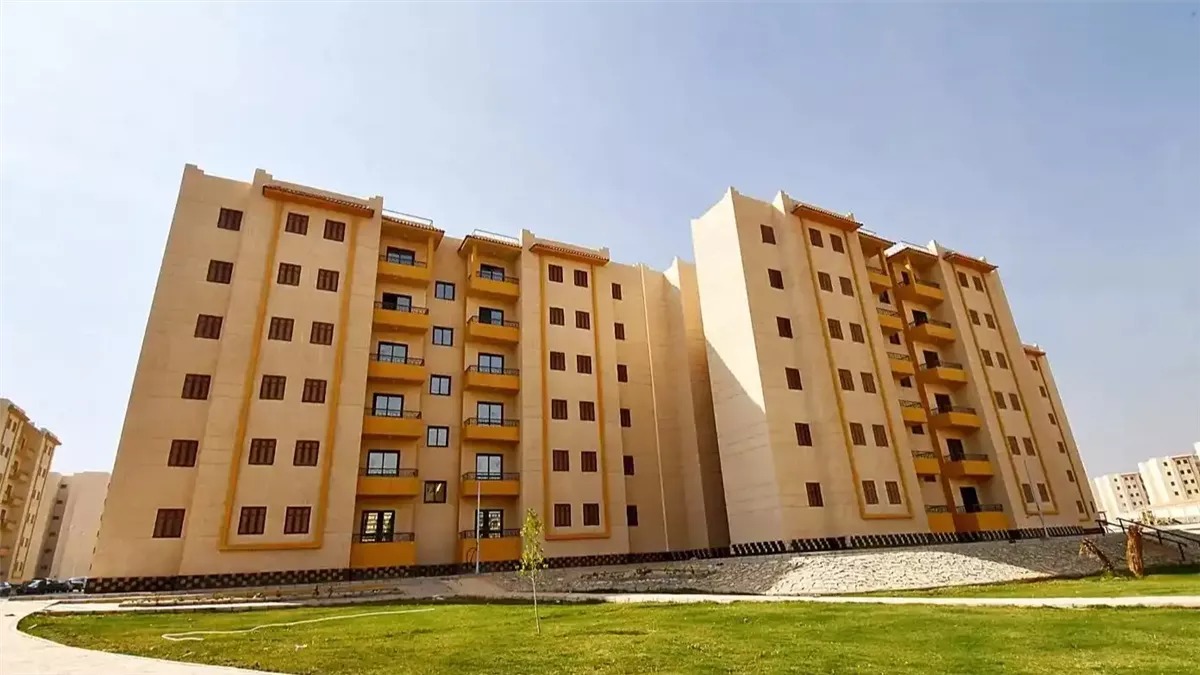
During recent inspection campaigns carried out in one of Egypt’s newly developed residential communities, authorities detected several violations involving social housing units. The findings prompted the relevant authorities to initiate the legally prescribed procedures, including posting official violation notices on the affected units as a preliminary step toward completing the legal process.
Following these actions, some inaccurate interpretations circulated claiming that the government intended to confiscate or seize social housing units. However, such claims contradict both the facts and the actual role of the Social Housing Law Violations Monitoring System.
The government, which has invested billions of Egyptian pounds to provide these housing units, aims solely to protect the rights of eligible beneficiaries and ensure that public subsidies reach those who genuinely qualify.
Mai Abdel Hamid, CEO of the Social Housing and Mortgage Finance Fund, emphasized that social housing units are intended exclusively for permanent residential use. Beneficiaries are prohibited from renting, selling, transferring ownership, issuing powers of attorney related to the units, signing unofficial sale agreements, or converting the units from residential to commercial, administrative, or any other unauthorized use that violates allocation conditions.
Abdel Hamid explained that the objective of enforcing these regulations is not to impose restrictions on citizens but to ensure that government support reaches those who genuinely deserve it, particularly since the state covers a significant portion of each unit’s cost.
She added that beneficiaries receive housing units at cost price without paying for the land or infrastructure, while also benefiting from subsidized mortgage financing at a declining interest rate of 8% over extended repayment periods, in addition to direct cash subsidies deducted from the purchase price.
According to Abdel Hamid, the combined value of these support mechanisms means that beneficiaries effectively pay only around 40% to 50% of the property’s actual value. This makes it essential to ensure that government subsidies benefit families genuinely in need of housing rather than individuals seeking financial gains by illegally reselling or renting subsidized units.
These measures reflect the project’s founding philosophy, which is centered on achieving social justice rather than creating a parallel market for trading government-subsidized housing. At a time when thousands of eligible citizens continue to wait for housing opportunities under new government offerings, it is unacceptable for some beneficiaries to acquire subsidized units and then illegally change their use or exploit them for personal profit.
This underscores the importance of the Social Housing Law Violations Monitoring System as a vital mechanism for protecting public funds while safeguarding the rights of eligible citizens. The objective is not to withdraw units from law-abiding beneficiaries but to address cases of fraud and abuse that deprive other deserving families of the opportunity to obtain affordable housing.
Over the past several years, the Social Housing and Mortgage Finance Fund has successfully delivered hundreds of thousands of housing units to low-income citizens under what has become one of the largest subsidized housing programs in Egypt’s history. The initiative has helped provide decent housing and residential stability for millions of Egyptians.
For this reason, the long-term success of the program depends not only on constructing additional housing units but also on preserving its core mission: ensuring that government support reaches those who truly deserve it.
In this context, the Social Housing Law Violations Monitoring System serves as the first line of defense in protecting that mission, ensuring the sustainability of the program and its ability to continue serving future generations of low-income citizens by fulfilling its primary objective—providing safe, dignified housing for those who genuinely need it, rather than allowing subsidized homes to become opportunities for speculation or profit.