
Eng. Randa El-Menshawy, Minister of Housing, Utilities, and Urban Communities, followed up on the progress of a number of drinking water and wastewater projects being implemented under the presidential “Hayah Karima” initiative to develop Egyptian rural villages in several governorates.
The follow-up was based on the results of field tours conducted by officials from the National Organization for Potable Water and Sanitary Drainage, with the aim of accelerating implementation rates, quickly completing projects with high completion rates, and putting them into service, thereby benefiting citizens.
The minister of housing stressed the need to intensify coordination among all entities involved in the projects to ensure the rapid completion of works in accordance with the specified timelines while continuing to monitor and fully implement all project components.
This would help maximize the benefits of investments allocated to the initiative, achieve its objectives in improving the level of services provided to citizens, and support the state’s efforts to achieve sustainable development.
The minister of housing reviewed a report covering the results of a tour conducted by Eng. Amin Shawky, chairman of the National Organization for Potable Water and Sanitary Drainage, along with a number of organization officials, in Beni Suef.
The tour included inspections of the Dandil Treatment Plant, with a capacity of 40,800 m³/day; the Hammam Pumping Station and its gravity networks; the Abusir Treatment Plant, with a capacity of 30,150 m³/day; the Ashmant Pumping Station and its networks; and the Tansa Bani Malu Treatment Plant, with a capacity of 40,200 m³/day. The importance of adhering to technical standards and quickly overcoming obstacles was emphasized.
The follow-up in Damietta Governorate also included the results of a tour by Eng. Essam Abdel Hamid, Head of the Central Administration for the Implementation of Bahr East Projects at the organization, to a number of wastewater treatment projects under the presidential “Hayah Karima” initiative for developing Egyptian rural villages in the governorate.
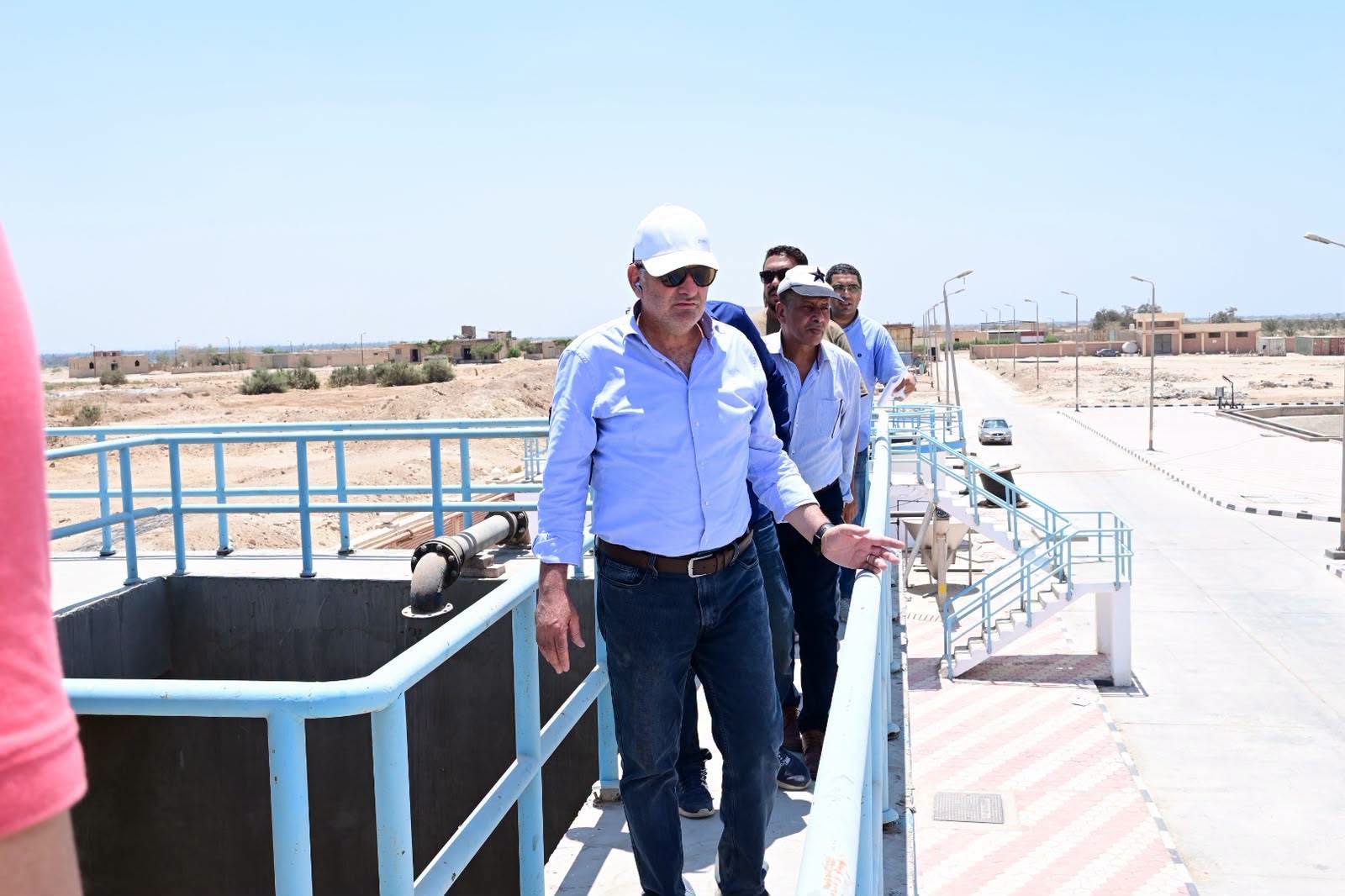
These included the Kafr Suleiman El-Bahary Treatment Plant, with a capacity of 10,500 m³/day; the Om El-Razek Wastewater Treatment Plant, with a capacity of 5,000 m³/day; and the Kafour El-Ghab Wastewater Treatment Plant, with a capacity of 5,000 m³/day. The need to accelerate the pace of work and overcome obstacles was emphasized.
In Minya, Eng. Abdelsalam Barakat, head of the Central Administration for Upper Egypt; Eng. Nageh Abdel Rahman, deputy head of the Central Administration for the Implementation of Upper Egypt Projects at the organization; and a number of organization officials conducted inspection tours covering a number of wastewater pumping station projects.
These included the Manashat Niazi Village Wastewater Pumping Station, Abu Busht Wastewater Pumping Station, the Main Tanbadi Wastewater Pumping Station, the Abu El-Balad Sub-Pumping Station, and the Sheikh Ziad Wastewater Pumping Station in Maghagha District, in addition to the Rahmaniya Village Wastewater Pumping Station, the Nasiriyah Village Pumping Station, the Main Bani Haram Pumping Station, and the Bani Haram Sub-Wastewater Pumping Station in Deir Mawas District.
The follow-up in Assiut Governorate included a number of projects, including the Al-Awamir Sub and Main Pumping Stations, the Main and Sub Bani Zaid and Al-Akrad Pumping Stations, and the Main and Sub Baqour Pumping Stations.
It also included an inspection of the Arab Al-Tawla Wastewater Project in Al-Fateh District, the Dashlout Treatment Plant, the Awaja Treatment Plant, the Nagaa Khodr Village Pumping Station, the Al-Nihaya Village Wastewater Pumping Station, and the Main Sanbo Wastewater Pumping Station in Dairut District.
The expansion works at the Sadfa and Al-Ghanayem Wastewater Treatment Plant, with a capacity of 20/40,000 m³/day, were also followed up. The plant will serve 17 villages in Sadfa District.
The Arab Al-Kablalat Wastewater Treatment Plant, with a capacity of 20,400 m³/day, was also monitored. The plant will serve 14 villages in Al-Fateh District, Assiut. Randa El-Menshawy noted that drinking water and wastewater projects represent one of the main pillars of the state’s efforts to develop the Egyptian countryside.
She stressed the importance of ensuring integration between the implementation of utility networks and plants and the various components of basic infrastructure in a manner that achieves the highest operational efficiency for projects once they enter service, protects the investments made, ensures the sustainability of services, and delivers a tangible development impact for residents of the targeted villages.