
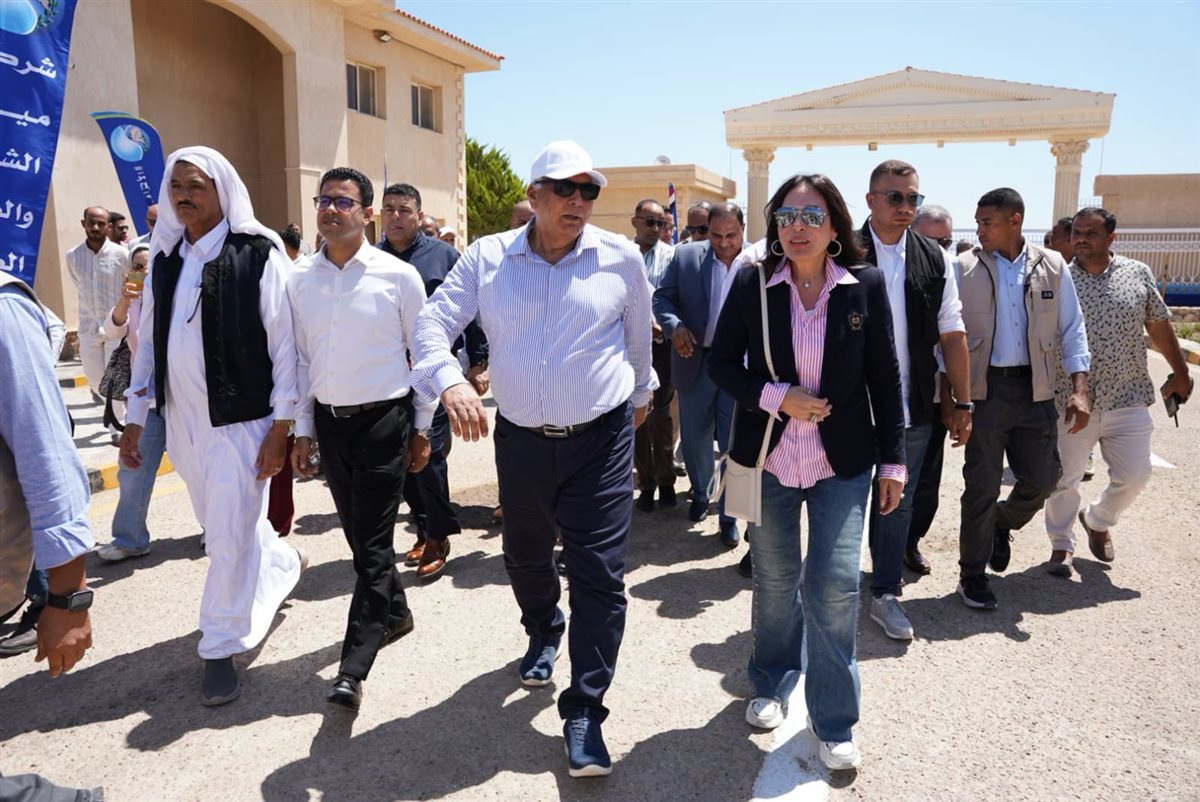
As part of monitoring strategic infrastructure projects and strengthening water security in Matrouh Governorate, Engineer Randa El Menshawy, Minister of Housing, Utilities, and Urban Communities, and Major General Mohamed El Zamlout, Governor of Matrouh, began an extensive inspection tour of several drinking water and wastewater projects across the governorate to assess the readiness of the water supply system to meet the needs of residents and visitors during the summer season.
The tour was attended by Eng. Ahmed Omran, Deputy Minister of Housing for Utilities, along with senior officials from the ministry, the governorate, and the Holding Company for Water and Wastewater.
Special Focus on Matrouh to Support Development and Tourism
The Minister of Housing emphasized that Matrouh Governorate is one of the state’s priority regions in urban development and tourism plans, requiring continuous enhancement of drinking water and wastewater facilities and upgrading existing plants to keep pace with urban expansion and the significant increase in residents and summer visitors during the tourist season.
She explained that the ministry continues to support desalination projects as one of the strategic solutions for securing the governorate’s water needs, particularly in light of the rapid growth witnessed in the North Coast and Matrouh cities.
El Ramlah: The Heart of Matrouh’s Desalination System
The minister and governor began their tour by inspecting the El Ramlah Seawater Desalination Complex, which has a total production capacity of 113,000 cubic meters per day and is considered one of the most important projects for supplying drinking water to Marsa Matrouh.
During the visit, they inspected the El Ramlah Desalination Plant (1-2), which has a design capacity of 48,000 cubic meters per day. The plant includes eight desalination units and storage facilities with a total capacity of 20,000 cubic meters, enhancing its ability to meet the city’s water demand while maintaining the highest quality standards.
El Ramlah (4) Plant: A New Addition to Strengthen Water Supply
The tour also included the El Ramlah (4) Seawater Desalination Plant, which has a production capacity of 65,000 cubic meters per day and is currently completing final handover procedures before entering service.
Officials received a detailed presentation on the project’s components. The plant consists of four production units, each with a capacity of 16,500 cubic meters per day, with the potential to double its production capacity in the future to reach 130,000 cubic meters per day as part of planned expansion efforts.
Reviewing Operational Stages and Technical Reliability
The Minister of Housing and the Governor of Matrouh inspected the plant’s various operational stages, beginning with seawater intake, followed by treatment and filtration through 24 sand filters, and concluding with the produced water storage tanks and pumping and distribution systems.
They also reviewed the plant’s power backup systems, which rely on three generators with a capacity of 2.5 megawatts each to ensure uninterrupted operation and maintain service continuity during any emergency power outages.
Intensive Preparations for the Summer Season
During the tour, the Minister of Housing directed officials to maintain around-the-clock field monitoring, raise preparedness levels at all operating sites, and respond promptly to any emergencies that could affect service stability.
She stressed the importance of adhering to operation and preventive maintenance programs for desalination plants and maximizing the utilization of available production capacity to ensure the continuous supply of safe and sustainable drinking water for residents and visitors.
Governor: New Plant Will Enhance Water Supply Stability
For his part, Major General Mohamed El Zamlout affirmed that the state continues to invest in desalination projects in Matrouh Governorate to keep pace with population growth and the ongoing urban and tourism expansion.
He noted that the commissioning of El Ramlah (4) Plant will significantly strengthen the drinking water system, directly improving network efficiency and enhancing the stability of water supplies, particularly during peak demand periods.
He added that this is being achieved through continuous coordination between the governorate, the Ministry of Housing, and the Holding Company for Water and Wastewater in support of the governorate’s comprehensive development plans.