
The agreement stems from both parties’ national roles in serving the community and aims to unify efforts to enhance public awareness and promote positive behaviors in the use of water resources, supporting the state’s efforts to achieve sustainable development and preserve vital resources.
The memorandum comes in conjunction with the issuance of the Drinking Water and Sanitation Utilities Regulation Law No. (172) of 2025 and its anticipated executive regulations. It aims to launch extensive digital and community awareness campaigns focused on rationalizing water consumption and reducing harmful practices such as water wastage, illegal connections, and encroachments on water and sanitation networks.
Following the signing ceremony, Engineer Randa El-Menshawy stressed that water conservation is among the Egyptian state’s highest priorities, noting that raising public awareness about the importance of preserving every drop of water is one of the main pillars of the Ministry of Housing’s strategy to improve utility management efficiency and ensure the sustainability of drinking water and sanitation services.
The Minister of Housing added that the issuance of the Drinking Water and Sanitation Utilities Regulation Law No. (172) of 2025 marks a significant milestone in developing the legislative framework governing the sector.
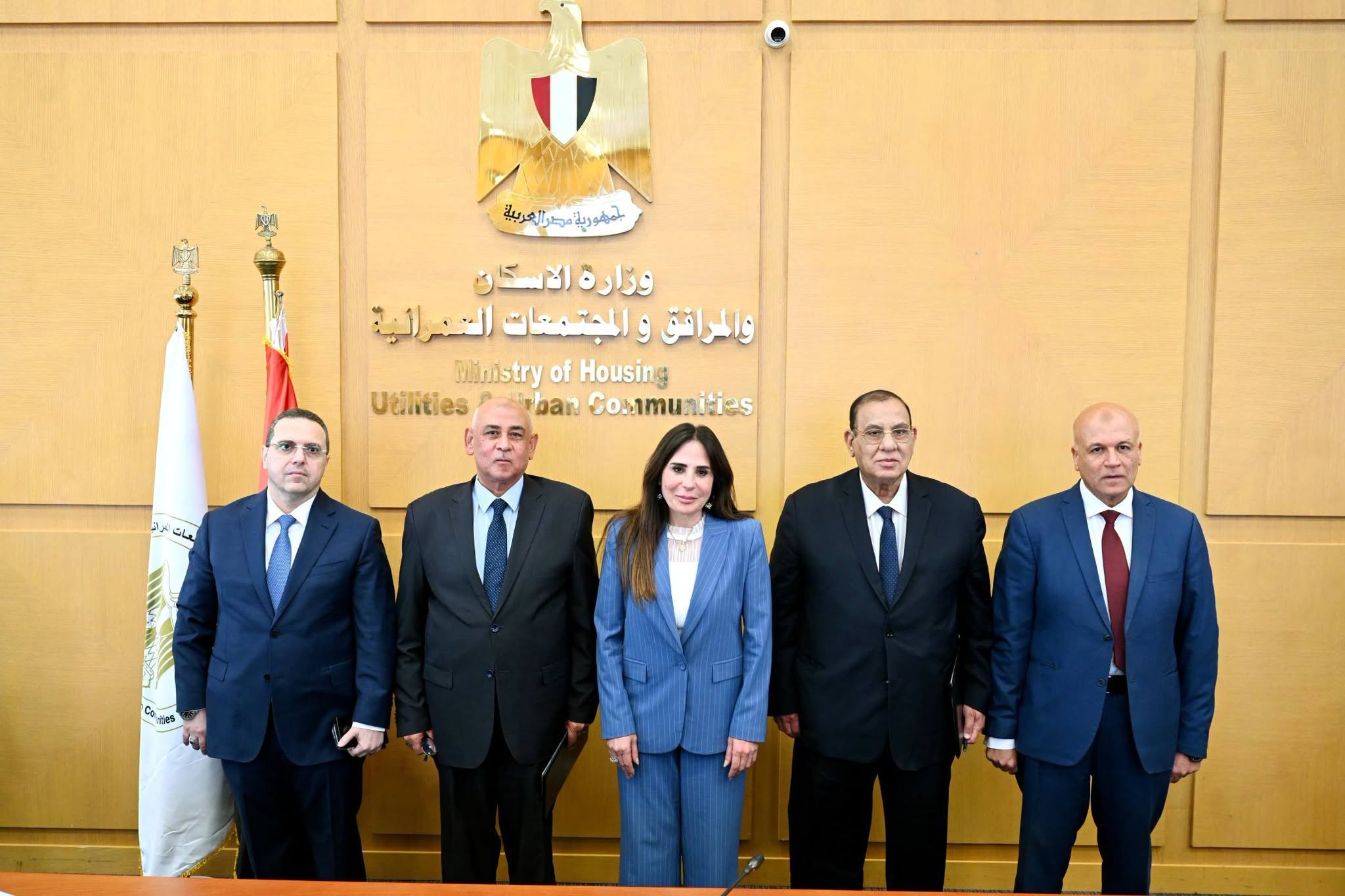
The law strengthens governance, oversight mechanisms, and consumer rights protection. She emphasized the importance of educating citizens about the provisions of the new law, including their rights and responsibilities, to encourage public compliance and support the stability and sustainability of utility services.
Engineer Randa El-Menshawy also praised the vital role played by civil society organizations in spreading public awareness and reaching diverse segments of society. She affirmed that the partnership between government entities and civil society organizations represents a successful model of integration in implementing awareness initiatives and achieving tangible results on the ground, particularly in villages and the most underserved areas.
For his part, Dr. Mohamed Hassan Mostafa, Chief Executive Officer of the Drinking Water, Sanitation, and Consumer Protection Regulatory Authority, stated that this cooperation represents a pivotal step in implementing the authority’s regulatory and awareness strategy, based on the belief that water conservation fundamentally depends on citizens’ awareness and their active partnership with the state.
He explained that under the agreement, the Authority will prepare and develop approved legal and awareness content, simplify the provisions of Law No. 172 of 2025, and transform them into clear and accessible media messages.
It will also provide all digital and printed awareness materials, including brochures, infographics, and educational videos, while fully supervising their legal and technical accuracy and monitoring campaign performance to assess its impact on the ground. These efforts aim to protect consumer rights and achieve a fair and sustainable balance within the utilities sector.
Meanwhile, Dr. Talaat Abdel Qawy, president of the General Federation of NGOs and Civil Associations, stated that civil society work is the strongest tool for bringing about real changes in community behavior. He expressed his pride in collaborating with the regulatory authority to promote a culture of rational water use and encourage voluntary compliance with the provisions of the new law.
He noted that the Federation possesses an extensive geographical and social network, enabling it to disseminate campaign content through all affiliated civil associations and activate direct communication channels through seminars, community meetings, and field initiatives.
He added that special emphasis will be placed on utilizing association volunteers to reach the most vulnerable groups, particularly in rural areas, to educate them about their rights and responsibilities while reducing water wastage and illegal encroachments on drinking water and sanitation networks.