
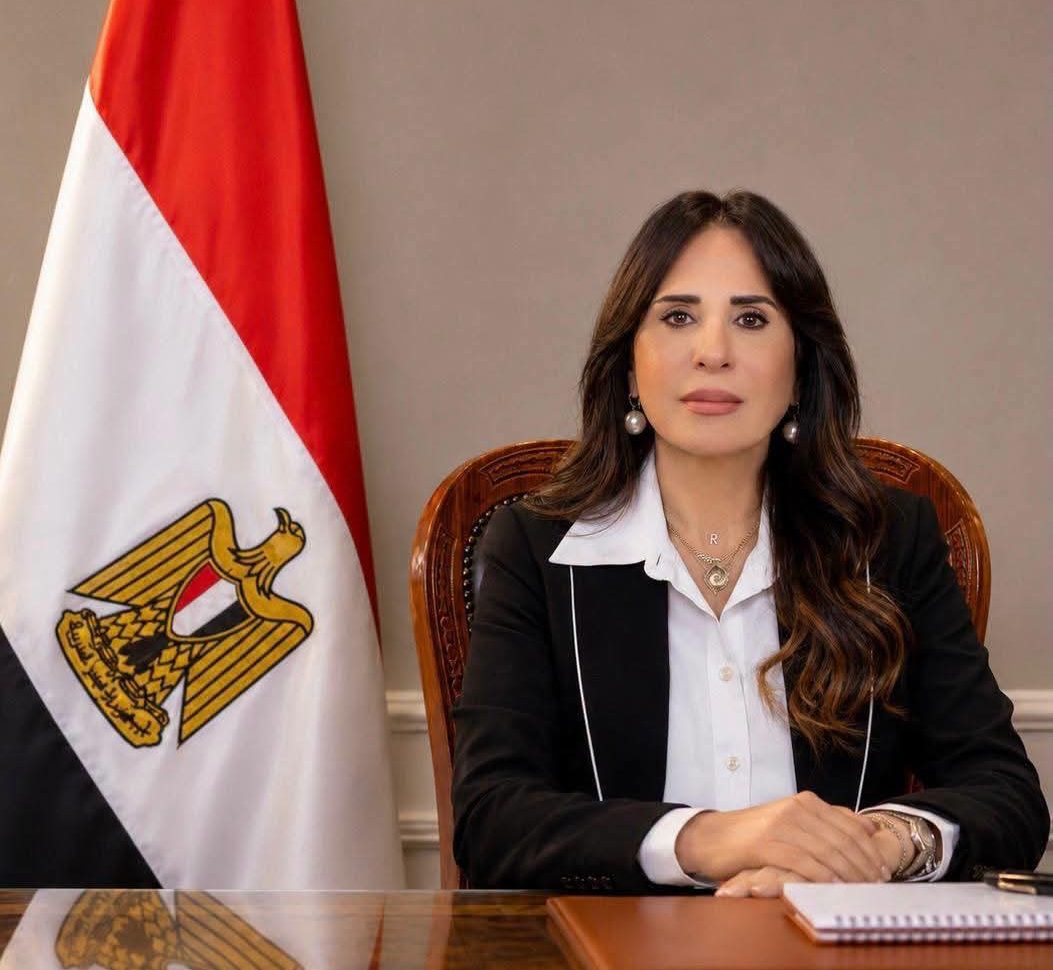
Engineer Randa El Menshawy, Minister of Housing, Utilities, and Urban Communities, reviewed the achievements of the Central Agency for Reconstruction (CAR), affiliated with the ministry, during the period from 2014 through June 2026 under the New Republic led by President Abdel Fattah El-Sisi.
She explained that the agency has implemented 1,951 national projects across the sectors of roads, bridges, housing, utilities, and public services, reflecting its pivotal role in supporting the state’s efforts to achieve comprehensive development and improve citizens’ quality of life.
The Housing Minister added that the Central Agency for Reconstruction carried out targeted projects under its investment plan during that period, in addition to projects implemented on behalf of several ministries, governorates, and state entities, with total investments amounting to EGP 203.2 billion.
She noted that the agency has completed 1,717 projects, while 234 projects are currently under implementation. The agency has also executed the first phase of the presidential “Decent Life” (Hayah Karima) initiative to develop rural Egypt within the Ministry of Housing’s scope, covering 746 villages and their affiliated communities across 25 districts in 10 governorates.
Road Projects
In its report, the Central Agency for Reconstruction explained that road projects serve as vital arteries for development by connecting production areas with distribution centers, facilitating the movement of labor, raw materials, and construction supplies, supporting domestic trade, reducing travel times, lowering fuel consumption, and decreasing accident rates.
The report stated that the agency has implemented and is implementing 610 road projects with a total length of 6,448.5 kilometers, at a total cost of EGP 94.8 billion.
According to the report, 546 road projects totaling 5,348 kilometers have been completed, including eight national highways, eight main roads, and 530 internal roads across governorates. Meanwhile, 64 projects are currently under implementation, covering 1,100.5 kilometers, including four national highways, seven main roads, and 53 internal roads.
Housing Projects
The Central Agency for Reconstruction confirmed in its report that housing projects are designed to provide suitable housing that aligns with the characteristics of local communities while enhancing social stability and strengthening citizens’ sense of belonging.
The projects include a variety of housing models, such as Bedouin housing, social housing, replacement housing for informal and underprivileged areas, desert hinterland projects, development clusters, and resettlement housing units.
The report stated that the agency has completed and is implementing 326 housing projects, comprising 85,326 housing units and 1,837 commercial shops, with a total investment of EGP 37.3 billion. Of these, 290 projects have been completed, delivering 74,879 housing units and 1,837 commercial shops at a cost of EGP 16.5 billion, while 36 projects are under construction, providing 10,447 housing units at a cost of EGP 20.8 billion.
Among the most notable completed housing projects are 43,597 housing units under the presidential “Housing for All Egyptians” initiative, along with 1,639 commercial shops across 26 governorates, at a total cost of EGP 5.8 billion.
The projects also included the residential development on the Imbaba Airport site, comprising 3,118 housing units and 231 commercial shops, including utility works and site landscaping, at a cost of EGP 595 million. In addition, 1,804 Bedouin houses, each with an area of 200 square meters, were constructed in North Sinai, South Sinai, and Ismailia governorates at a cost of EGP 530.7 million.
The completed projects further included the construction of 3,822 housing units in Halayeb, Shalateen, Abu Ramad, and Marsa Alam in the Red Sea Governorate at a cost of EGP 1.04 billion, as well as 50 rural houses in Khartoum Village in Kharga City at a cost of EGP 18 million.
The agency also redeveloped the Tal Al-Aqarib (Rawdat Al-Sayyida) area through the construction of 16 residential buildings containing 816 housing units and 198 commercial shops, at a cost of EGP 200 million, as part of the state’s informal settlements development program.
Additional achievements include the construction of 18 new residential communities containing 1,180 housing units within the new development clusters in North and South Sinai, at a cost of EGP 2.8 billion, as well as the establishment of four fishermen’s villages in the Aghziwan area of North Sinai, comprising 200 housing units, at a cost of USD 27.8 million.
The agency also implemented expansions to existing development communities, adding 946 houses, including utilities and public services, at a cost of EGP 1.237 billion. The projects also included the redevelopment of the Al-Tayebi Area (Rawdat Al-Sayyida 2), comprising nine residential buildings with 572 housing units, 30 commercial shops, a nursery, a service building, and site landscaping works, at a total cost of EGP 577 million.
The report noted that among the most significant housing projects currently under implementation is the construction of 46 residential buildings under the “Housing for All Egyptians” initiative in Hurghada, providing 920 housing units at a cost of EGP 1.9 billion. Other ongoing projects include 16 Bedouin houses in South Sinai at a cost of EGP 295 million and 60 housing units in Marsa Alam in the Red Sea Governorate at a cost of EGP 48.7 million.
The first phase of development clusters is also underway, involving the construction of four new communities in the Rafah and Sheikh Zuweid districts of North Sinai, comprising a total of 6,047 houses, including utilities and public services, at a total investment of EGP 15 billion.
Utilities and Public Services Projects
The report explained that utilities and public services projects aim to provide essential infrastructure, construct service buildings, extend utilities to new industrial zones, and restore historical and archaeological sites, contributing to improved public services, supporting development efforts, and creating employment opportunities.
According to the report, the agency has implemented and is implementing 1,015 projects in the utilities and services sector, with total investments of EGP 71.2 billion. These projects include drinking water, sanitation, electricity, judicial complexes, restoration and rehabilitation of heritage buildings, integrated development projects, social solidarity facilities, local development units, slaughterhouses, youth centers, sports fields, community halls, and other public facilities.
The report added that 881 projects have been completed at a cost of EGP 14.5 billion, while 134 projects are currently under implementation at a cost of EGP 56.7 billion.
Among the most prominent completed projects are 28 agricultural development projects serving Bedouin communities in North and South Sinai, covering a total area of 1,067 feddans, at a cost of EGP 350 million, in addition to drinking water projects in Abu Ramad, Shalateen, and Halayeb under the Berenice Sector Development Project, at a cost of EGP 878.5 million.
The report added that major ongoing projects include strengthening and expanding electricity networks in North Sinai, South Sinai, and the New Valley, reinforcing drinking water networks in Halayeb under the Berenice Sector Development Project, and completing the second and third phases of dredging and deepening the Burullus Inlet and Lake Burullus, which will support fisheries development and expand productive fishing areas.
Current projects also include the restoration of part of the Fatimid Cairo Wall, the restoration and adaptive reuse of Sakakini Palace, the reclamation of 400 feddans in Al-Marashda in Qena Governorate, the completion of several slaughterhouses, the Great Transfiguration Site development project in Saint Catherine, and the Fustat Gardens project.
At the conclusion of the report, the Central Agency for Reconstruction announced that it has trained and qualified approximately one million trainees between 2014 and June 2026 as part of its role in preparing skilled technical personnel and supporting Egypt’s comprehensive development efforts.